By Olakunle Oke & Gbenoba Kamsy
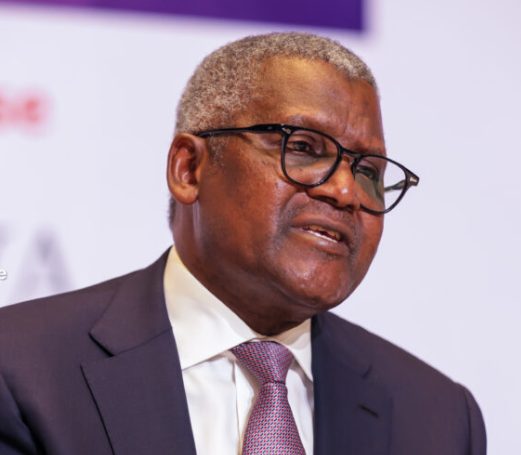
Africa’s richest man, Aliko Dangote, will require about 2.1 million barrels of crude oil per day to supply his expanding refining operations, highlighting the growing feedstock requirements as Nigeria seeks to establish itself as a regional refining hub.
Dangote, represented by the Chief Economist of Dangote Refinery, Dr. Hassan Mahmood, at the 3rd Nigeria Oil Refining Summit, NORS 2026, in Lagos, said the company’s 650,000 barrels-per-day refinery in Nigeria had been scaled up to 700,000 bpd.
He said another Dangote refinery outside Nigeria, initially designed for 650,000 bpd, was also being upgraded to 700,000 bpd, while the group has a 700,000 bpd refinery in East Africa.
The combined capacity would bring Dangote’s refining operations to about 2.1 million bpd.
The disclosure came as the Crude Oil Refinery-Owners Association of Nigeria, CORAN, and the Independent Petroleum Producers Group, IPPG, demanded measures to guarantee reliable and commercially viable crude supplies to domestic refineries.
CORAN said some local refineries still struggle to access crude despite Nigeria’s substantial oil resources.
The association presented a 10-point agenda, including the full institutionalisation of Naira-for-Crude, transparent access for qualifying refineries, a domestic crude pricing framework and stronger enforcement of the Domestic Crude Supply Obligation under Section 109 of the Petroleum Industry Act.
CORAN also called for crude swaps and proximity-based supply arrangements, reduced fuel imports limited to verified shortfalls, long-term refinery financing, shared infrastructure and a national refining roadmap.
IPPG Chairman, Adegbite Falade, said Nigeria must increase crude production while creating a commercially viable market for supplying domestic refineries.
“The real question is whether we can convert reserves into production, production into secure supply, and secure supply into refining competitiveness,” Falade said.
He said achieving this would require “capital, fiscal stability, security, infrastructure, regulatory certainty and bankable commercial terms.”
Falade disclosed that compliance with the Domestic Crude Supply Obligation rose to 97.4 per cent in Q2 2026 from 41 per cent in Q1, adding that IPPG’s 34 indigenous exploration and production companies account for more than half of Nigeria’s total oil and gas production.
He said the industry must focus on increasing production, protecting evacuation infrastructure, developing a transparent domestic crude market and positioning Nigeria as a regional refining and petrochemical hub.
“Upstream and downstream are not separate industries but one integrated value chain,” Falade said.
CORAN Chairman, Momoh Oyarekhua, called for a domestic crude pricing template and a clear national refining roadmap to address refiners’ difficulties in accessing crude on commercially viable terms.
He said, “At the same time, fuel imports persist while local refining capacity remains underutilised.”
Oyarekhua said the pricing template should recognise crude quality, delivery points, avoided international logistics costs and actual domestic evacuation expenses.
He also called for clear targets covering refining capacity, domestic market share, petroleum-product imports and eventual export capacity.
Oyarekhua urged the full institutionalisation of Naira-for-Crude, with transparent eligibility for qualifying domestic refineries, including modular plants, as well as stronger enforcement of the Domestic Crude Supply Obligation.
He stressed that, “Nigeria should not continue exporting crude, exporting jobs and importing the same petroleum products at considerable economic cost.”
He added: “Our crude must increasingly power our refineries. Our refineries must increasingly supply our market. And Nigeria must ultimately become a refining hub for Africa. That should be the destination of petroleum-sector reform.”
Meanwhile, Lagos State Governor, Babajide Sanwo-Olu, said Nigeria’s expanding refining capacity must drive manufacturing, job creation and industrial growth.
Speaking at the summit, he said refining capacity alone was insufficient.
“Having refineries is only part of the equation. The crude must get to the refineries. The refined products must reach the market efficiently,” he said.
Sanwo-Olu said the Lekki Deep Sea Port, Lekki Free Zone and Dangote Refinery could stimulate wider economic activity.
“Their real significance will be measured by the businesses, jobs, supply chains and new industries that grow around them,” he said.