By Princess Olufemi-Kayode
Twelve years after the Chibok schoolgirls were taken from their dormitories, Nigeria is still asking the same painful question: are our children any safer?
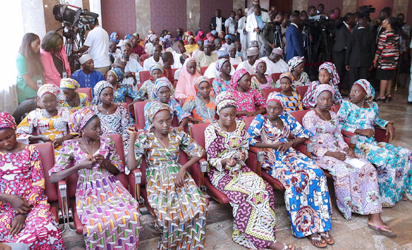
It is a question that should trouble every parent, teacher, policymaker and citizen. On April 14, 2014, 276 girls were abducted from Government Girls Secondary School, Chibok, Borno State. Their names travelled around the world. Their faces became posters. Their absence became a global campaign.
But after the hashtags faded, many families were left with silence. Some of the girls returned years later with children born in captivity. Some never came home. For their parents, the tragedy did not end when the world moved on.
Today, the fear that entered Chibok has not left Nigeria’s school system. It has spread. From the North East to the North West, from rural communities to places once considered less vulnerable, schoolchildren have continued to be abducted, displaced or kept at home because the journey to school no longer feels safe.
The latest reminder came from Oyo State. On May 15, 2026, gunmen attacked schools in Esiele and Yawota communities in Oriire Local Government Area, abducting pupils and teachers from Community Grammar School, Baptist Nursery and Primary School, and L.A. Primary School. A mathematics teacher, Michael Oyedokun, was reportedly killed. Imagine the ordinary morning that became a nightmare: children in uniforms, teachers preparing for lessons, parents expecting them back by afternoon. Instead, families began waiting for news no parent should ever have to receive.
On May 31, the federal government sent a high-powered delegation to the affected communities. The president also approved the recruitment of 1,000 forest guards in Oyo State and directed a special rescue team to intensify efforts. These steps matter. They show that government can act when a crisis becomes impossible to ignore.
But the deeper question remains: why must children first be abducted before protection becomes urgent?
Across Nigeria, insecurity has changed the way families think about education. In some communities, parents keep children at home after rumours of an attack. In others, school gates open, but classrooms are half-empty because fear has already done its work. Teachers teach with one ear on the road. Children learn under the shadow of uncertainty. A school that children are afraid to enter is not truly a school.
Yet abduction is only one part of the crisis. Many Nigerian children face danger long before it reaches the headlines. Some are pushed into hawking when they should be in class. Some girls are withdrawn from school for marriage. Some children live with sexual abuse inside homes where they are supposed to be protected. Some work as domestic servants in houses where no one checks whether they are safe, fed, paid or abused.
In Kwara State, reports of armed attacks have included the abduction of women, pregnant women, nursing mothers and children. These incidents remind us that child protection cannot be separated from the wider insecurity affecting families. When mothers are taken, children are endangered. When communities are attacked, schools suffer. When fear becomes part of daily life, childhood itself is interrupted.
Nigeria does not lack laws. That is no longer the main problem. The Child Rights Act exists. States have passed child rights or child protection laws. In the North, many of these laws are called Child Protection Laws rather than Child Rights Laws. That distinction is important, but not as important as what happens after the law is passed.
The real gap is implementation.
Does the child in a rural community know where to report abuse? Does the nearest police station have officers trained to handle a child victim with care? Is there a social welfare officer available, mobile and properly resourced? Can a school respond quickly when there is a threat? Are there safe referral pathways for children who have been violated, trafficked, abducted or forced into marriage?
Too often, the answer is no.
This is why child protection in Nigeria must move from speeches to systems. It is not enough to condemn every abduction after it happens. It is not enough to promise rescue after families have already been thrown into anguish. Protection must begin before the attack, before the abuse, before the forced marriage, before the child disappears from school.
Every state should have a funded child protection plan that works beyond the capital city. Every local government should have a functional child protection structure. Schools, especially in vulnerable communities, should have basic safety plans, emergency contacts, early warning links with communities and clear procedures for reporting threats. Teachers should know what to do when a child is at risk. Police officers should know how to handle children without intimidation, delay or carelessness.
Children rescued from captivity or abuse also need more than public sympathy. They need medical care, trauma support, family tracing, education recovery, legal assistance and long-term reintegration. A rescued child should not be displayed for the camera and then abandoned to stigma, nightmares and poverty.
Government must also address the everyday conditions that expose children to harm. Poverty keeps children on the streets. Poor school quality makes some families question the value of education. Insecurity makes parents choose between learning and survival. Harmful norms continue to push girls into early marriage. These are not separate problems. They are connected failures.
The response must therefore be practical. Fund education properly. Make the Safe Schools programme visible in real communities, not only in policy documents. Train police, teachers, social workers and judicial officers. Track child protection cases from report to response. Support poor families so that children, especially girls, can remain in school. Hold governors, local governments and relevant agencies accountable for what happens to children under their watch.
The Nigerian child is not unsafe because Nigeria does not know what to do. The child is unsafe because what we know has not been done with consistency, urgency and discipline.
Chibok should have changed the country’s understanding of school safety forever. It should have forced a national system that makes it difficult for armed men to reach children, disappear into forests and leave families begging for attention. Instead, twelve years later, new parents are learning the old pain of waiting.
The question is no longer whether Nigeria has laws, policies or committees. It does.
The question is whether a child can go to school, sleep at home, play in the community, report abuse and expect protection from the state.
Until the answer is yes, Nigeria has not learned enough from Chibok.
•Dr Olufemi-Kayode is a child protection specialist and criminal justice psychologist.