As Nigeria moves towards the 2027 general elections, the Inspector-General of Police, Olatunji Disu, has assured Nigerians that the force is ready to provide security, even if the elections were to begin immediately.
Disu gave the assurance on Tuesday, November 3, 2026, during a meeting with a United Nations delegation led by the UN Secretary-General’s Special Representative for West Africa and the Sahel, Leonardo Santos Simão.
The police chief said officers were undergoing training and retraining on election security, while the force was collaborating with other security agencies, including the Nigerian Army, the Department of State Services (DSS) and the Nigeria Security and Civil Defence Corps.
He also said the police had identified potential security challenges and were preparing to protect voters, including persons with disabilities.
However, recent incidents involving political actors have raised questions about the force’s ability to translate its assurances into effective protection ahead of the polls.
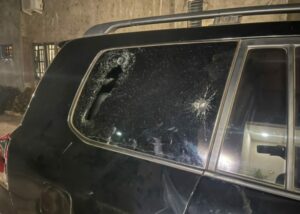
On October 30, the African Democratic Congress (ADC) governorship candidate in Sokoto State, Manir Muhammad Dan’iya, alleged that his convoy was attacked near Sokoto Airport after he escorted former governor Aminu Waziri Tambuwal to the airport.
The ADC alleged that personnel of the Sokoto Marshal and the state Community Guard obstructed the convoy and that gunshots were fired. The party also claimed that two DSS operatives were detained.
The All Progressives Congress (APC), however, dismissed the allegations as fabricated and accused the opposition of seeking public sympathy.
In a subsequent account, the DSS said its operatives had evacuated Dan’iya to safety, while two of its personnel were allegedly assaulted and were receiving medical treatment.
The incident came amid concerns by the ADC over security arrangements for its political activities in Sokoto.
Another incident was reported in Ekiti State, where African Action Congress (AAC) presidential candidate Omoyele Sowore alleged that armed men attacked him and members of his team in Ado-Ekiti on October 30.
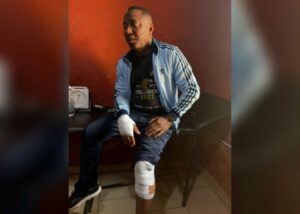
Sowore accused the Ekiti State Government and DSS operatives of involvement, allegations that have not been independently established.
The Ekiti State Police Command disputed the initial claim that Sowore had been kidnapped, saying preliminary information suggested an altercation with unidentified individuals. The command said officers responded to a distress call, rescued those affected and took them for medical attention.
The police also said Sowore had not formally notified the command of his movements in the state, adding that the commissioner of police had ordered an investigation into the incident.
The Ekiti State Government denied responsibility and called for a thorough investigation.
These incidents revive concerns about electoral violence and accountability in Nigeria, particularly following the 2023 general elections.
The European Union Election Observation Mission documented attacks on political actors, inadequate security responses in some areas and concerns about the prosecution of electoral offences.
Similarly, a joint report by the International Republican Institute and the National Democratic Institute, drawing on ACLED data, recorded 274 election-related violence incidents and 348 associated fatalities in 2023.
Although the police reported 781 arrests for electoral offences during the 2023 elections, observers raised concerns about limited public information on subsequent prosecutions and sanctions.
With the 2027 elections approaching, the challenge for the police will be to demonstrate that their preparations can prevent violence, protect political actors regardless of party affiliation and ensure that allegations of misconduct are investigated impartially