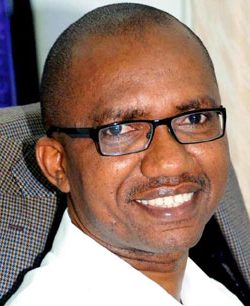
Chinedu Eze
The International Air Transport Association (IATA) has again identified Nigeria as one of the most expensive countries in the world to operate airline business, citing high operational costs that continue to challenge the viability and growth of local carriers.
Although the global body had reiterated this at different aviation fora, at the just concluded IATA AGM held in Rio de Janeiro, Brazil, the IATA Regional Vice President for Africa and the Middle East, Kamil Al-Awadhi, pointed it out again, saying that it will be very difficult for Nigerian carriers to survive because they are literally strangled with too many taxes and charges.
AI-Awadhi said despite on-going efforts by Nigeria’s Minister of Aviation and Aerospace Development, Festus Keyamo, to reform and improve the aviation sector, airlines in the country were still faced significant cost pressures.
According to Al-Awadhi, the high cost environment has made it difficult for Nigerian airlines to remain competitive and profitable, limiting the sector’s ability to reach its full potential.
He noted that excessive taxes, charges, and other operational expenses continue to burden airlines across the region, with Nigeria ranking among the most challenging markets from a cost perspective.
To address the issue, Al-Awadhi urged member states of the Economic Community of West African States (ECOWAS) to implement the proposed 25 per cent reduction in aviation taxes and charges.
He said the measure would help lower the cost of air travel, stimulate passenger traffic, and improve the competitiveness of airlines operating within West Africa.
The call by IATA adds to growing pressure on governments in West Africa to create a more enabling environment for the aviation industry, which is widely regarded as a key driver of trade, tourism, and economic development.
The CEO of ASKY Airlines, Esayas Woldemariam Hailu, once pointed it out to THISDAY that heavy taxation on Africa’s aviation sector was stifling economic growth, undermining job creation, and fuelling youth unrest across the continent, noting that one-third of the cost of tickets in Africa goes to taxes and fees. Only two-thirds go to the airline to cover all operational expenses.
Nigeria has a total of about 54 taxes, fees and charges spread across four major government agencies – the Nigeria Civil Aviation Authority (NCAA), the Federal Airports Authority of Nigeria (FAAN), the Nigerian Airspace Management Agency (NAMA), and the Nigeria Revenue Service.
Some of the charges include Common User Terminal Equipment (CUTE) at $1.40 per passenger, along with Passenger Service Charges (PSC) of N2,000 for domestic and $150 for international passengers, according to the document.
Other payments include: Apron pass (Abuja) – N250,000, (Lagos) – N150,000 and Port Harcourt – N125,000 per vehicle and it’s paid annually. Registration fee per annum – N500,000; On-Duty Card (ODC) – N25,000 per staff. Extension charges – N100,000; Air Charge Cargo (ACC) – N5 per kg; Cargo registration fee -N250,000 (non-refundable).
Others are trans-shipment – N5 per kg; Export charge – N5 per kg; Courier/tarmac/pre-release – N20 per kg; Landing charge – N16,000 (day) and N24,000 (night) and parking charge – .0315k by aircraft weight and multiply by hours of parking.
The Executive Chairman of United Nigeria Airlines and the spokesman of Airline Operators of Nigeria, Professor Obiora Okonkwo, said excessive and multiple taxation continued to stifle the growth of Nigerian carriers.
Okonkwo said the number of taxes imposed on airlines remained a key driver of high airfares in the country and urged that the National Assembly should review some of these taxes and charges.
“We are charged about 18 taxes on one single ticket. So, any ticket you buy, maybe 70 per cent of them goes to other government agencies. If the National Assembly will help us reduce these things, which are legislative in nature, we will be able to reduce also the cost of ticket so that it should be affordable to all.
The airlines pay about 30 taxes, fees and charges to the NCAA regularly and annually but it has to be noted that airlines make compulsory payments to agencies in other parts of the world but some governments introduce waivers to help their airlines and support them in other ways,” Okonkwo said.
Industry analyst and Executive Secretary of Aviation Round Table (ART), Olu Fidel Ohunayo, said the observation made by IATA was not new but what may be new is the fact that the global aviation community has noticed it.
According to him, it is unfortunate that Nigeria is being compared to Afghanistan which at best is a failed state and “when you are pitched with Afghanistan, it shows that there is complete breakdown, there is systemic failure. And these same failures cannot be solved by us just keep talking.”
“I think it is time for us to now sit down and work on a national plan of aviation for the nation. And we must take cognisance of those things highlighted in the report, which is the finance, which is the insurance. We also now have to talk about how to build critical mass. Because it is unfortunate that we have the highest domestic airlines in the continent but look at the fleet or asset of our domestic airlines, it is not even up to one airline in African countries like Morocco or South Africa,” he said.
Ohunayo stated that for Nigeria to build capacity, government and its agencies ought to allow the airlines to grow, give them necessary incentives, waive some of these taxes and charges to enable them have enough capital to expand their operations.
He said it was not about issuing out Air Operator Certificates (AOCs) to airlines with two, three aircraft but devising ways to make the airlines grow and build capacity so that they can effectively compete with their peers in Africa and beyond.
“Where is the pride in churning out these AOCs, allowing airlines with one aircraft, two aircraft and some don’t even have any aircraft at all. There is a need for us to rejig the system completely. And I also think we should address the issue of the 5% of Ticket Sales Charge. There should be a flat rate that will encourage more to travel, and that is easy and much easier to calculate with better option. Again, not having a flat rate is giving room for the airlines to increase fares by going into fuel surcharge and going into our security charges to add more money and using those exigencies that come up to put them on the ticket fare.
“We should have a flat rate for passengers, if there is no flat rate for airport, let us have a flat rate for tickets. The idea is to stimulate travel and have strong airlines. Without this, we will continue to dance around this topic, we will continue to waste our energy at different fora discussing the same thing; traveling to different conferences without really moving forward,” he further said.
One of the major challenges that industry experts had posited, was seeing air transport as means of revenue generation by the government instead of catalyst to economic growth.
Airlines can play that strategic role more effectively without milking them as revenue source, which is why air transport has not grown well in many African countries.