It’s an African ecosphere: It has some of the most colorful places on this planet, diverse species, and a remarkable landscape. But despite its natural richness, the continent is under pressure to take environmental precautions due to increasing rates of deforestation, a changing climate, a rising number of inhabitants, and the dying off of animals. Fortunately, the right smart-home device can already help make life here more enjoyable and eco-friendly in these dynamic times.
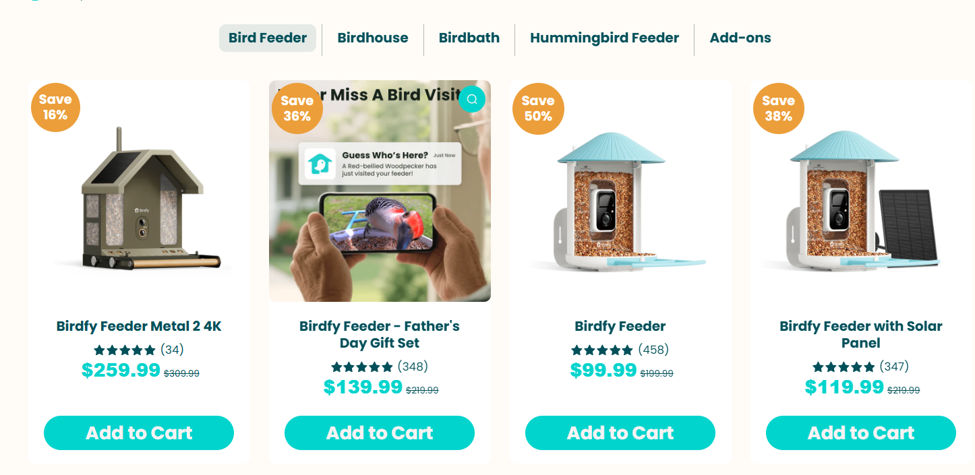
Among these is the Birdfy AI Smart Bird Feeder, and our range of modern Birdfy Feeders.
The Big Picture of Green Living and Smart Homes
Most people associate smart homes with a greater level of comfort, security, or even more efficient energy use. However, at the broadest level of environmentalism, smart technology can also work to substantially limit human activities that damage natural resources. Automated lighting turns off in vacant rooms. Intelligent home irrigation systems conserve precious water. The presence of ambient sensors can provide a greater awareness of indoor environmental conditions for healthier home environments.
Reducing Human Disturbance to Natural Habitats
Perhaps the more subtle of Smart Technology’s eco-benefits has to do with limiting our own intrusion on delicate wild environments. Until now, for much of our learning about animal life in nature, humans often needed to go there personally – crossing terrain and disrupting behaviour to observe. New connected and smart technologies make it easier and more practical to become engaged learners without disturbing the wildlife we hope to understand and conserve.
Through smart cameras and devices linked to the internet, we can get a window into the lives of even wild animals – a more unobtrusive method. Birds, insects, and other local fauna can continue their activities undisturbed from the confines of one’s home or neighborhood. This type of remote monitoring system can be of great interest to urban and suburban dwellers seeking connection with the natural world around their homes near green areas, protected lands, and wetlands without impact on delicate ecosystems.
Bird Watching Meets Artificial Intelligence
.
Birds are a vital link in many ecosystems: they help with seed dispersal, pollination, control pest populations naturally, and their presence or absence often acts as a reliable signal of local environmental health. Monitoring the population sizes and variety of birds present is a great way to get a pulse on our environment. But now, a Birdfy AI Smart Bird Feeder does more than attract birds to our yards for feeding.
The device combines powerful camera hardware and AI to not only detect visits but also identify the visiting species in real time, sending reports of these avian visitors to our smartphones. By bringing the practice of bird watching indoors (or more specifically, as an at-home mobile experience), AI-powered feeders can turn a hobby into an accessible, ongoing form of personal education about the environment and citizen science that requires less outdoor time and no interference in bird habits.
These types of devices are particularly suited to households, schools, and conservation groups throughout African nations, where access to the wilderness itself may be challenging for many of the inhabitants, making local nature observation accessible as a conservation activity.
Enhancing Biodiversity Monitoring Efforts
Collecting accurate data about what species reside where and how populations are fluctuating is critical for many conservation efforts, especially as resources may be stretched across such a continent of rich diversity.
AI-driven devices, such as our line of moder Birdfy Feeders can help close this gap, sending continuous data about bird visit frequency, diversity of visiting species, and even changes in behaviour that may be related to environmental conditions or human activity. This data can be shared with environmental organizations and conservationists.
Moreover, as many people in a community contribute information to community conservation monitoring projects, the combined dataset from multiple neighborhoods can provide useful information for managing the environment on a more localized, yet broadly collected basis. Citizen-generated and processed through innovative smart technologies, nature research comes home to the individual and the local neighborhood.
New Forms of Environmental Educators
Often, our inaction on environmental issues stems from a basic lack of knowledge, awareness, and connection. One of the greatest impacts of smart home tech might be how it makes learning about and connecting with our local ecosystems an everyday reality for everyone.
By enabling residents to view and identify the various species of birds that visit their bird feeders directly through their phones, it can foster a deeper appreciation for animal behaviour, the role each species plays in the environment, and our place within that system – even starting in childhood.
Smart technology provides a fascinating and ongoing supplement to school curricula in environmental science, making the importance of conservation tangible and interactive for a new generation of citizens.
Empowering Citizen Scientists throughout the Continent
As one of the crucial cornerstones of environmental scientific research and monitoring, citizen science taps into the power of passionate, non-expert volunteers to collect valuable data. The new era of smart wildlife observation makes citizen science more accessible than ever. Those using smart feeders like the
Birdfy AI Smart Bird Feeder contributes to a broader picture of biodiversity in Africa that scientists and conservationists rely upon – especially where resources are spread across massive distances. Citizen-captured data contributes to data, which in turn can inform conservation policy, research, and action more effectively and affordably. The activity is simple: watch and identify, but the data itself holds significant weight for the cause of wildlife conservation in Africa.
Dealing with Africa’s Urban Boom Through Smart Technologies
As urbanization picks up pace across Africa, how do cities and natural habitats co-exist sustainably? Smart home technologies can bridge that divide by reconnecting us to the local environments just outside our doors. AI wildlife monitors, like the various Birdfy Feeders, identify those species still thriving in our urban centers, while helping alert us to which native inhabitants need additional protection in our burgeoning metropolises.
Conclusion
The challenges of environmental sustainability and conservation in Africa require innovation, participation, and creative approaches. Smart home devices offer practical, efficient, and engaging solutions. From reducing energy consumption to enhancing biodiversity data collection to educating the public, technologies like the Birdfy AI Smart Bird Feeder and other modern Birdfy Feeders provide new pathways towards achieving a greener, more sustainable Africa that safeguards its precious natural heritage for the future.