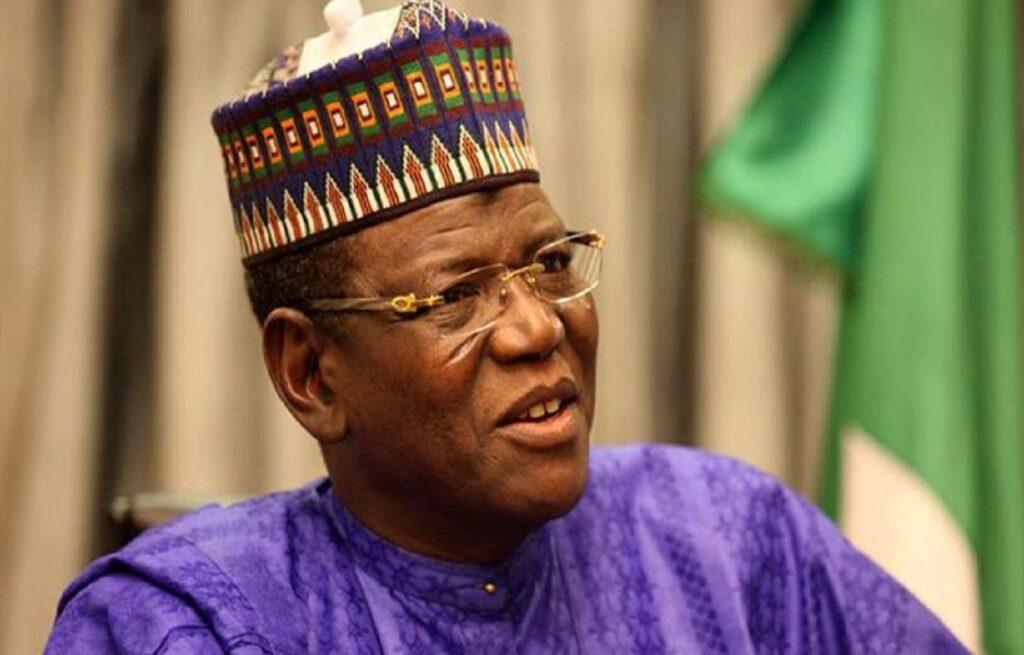
Former Gov. Sule Lamido of Jigawa and the Economic and Financial Crimes Commission (EFCC) disagreed on Tuesday over the witness subpoenaed by the commission and brought to court.
The development occurred before Justice Ijeoma Ojukwu of the Federal High Court sitting in Abuja shortly after the trial resumed.
The News Agency of Nigeria (NAN) reports that the EFCC is prosecuting Lamido on an allegation of money laundering to the tune of N1. 35 billion.
The former governor is being tried alongside his two sons – Aminu and Mustapha; Aminu Wada Abubakar and their companies – Bamaina Holdings Ltd and Speeds International Ltd.
The defendants, through their lawyer, Joe Agi, SAN, had applied that the EFCC Chairman, Ola Olukoyede and any other staff be summoned to give evidence in their defence, after their no-case submission was dismissed.
The defendants had opted for a no-case submission after the prosecution closed its case by calling 17 witnesses.
Although the case was initially reassigned to Justice Peter Lifu by the chief judge after the Supreme Court judgement which upheld the trial court ruling, the commission insisted that Justice Ojukwu, the earlier trial judge, concluded the matter.
The case was subsequently reassigned to Justice Ojukwu.
When the case was called on Tuesday, Kayode Oyetunde, a staff member and an investigator, was called by the lawyer to the anti-graft agency, Chile Okoroma, SAN, to testify.
But Agi sought an adjournment to allow him to interface with the subpoenaed witness.
Okoroma, however, opposed the application for adjournment.
The prosecution lawyer, instead, prayed the court to stand down proceedings to allow the defence to assess the witness, as all documents produced by the subpoenaed witness had already been frontloaded as evidence before the court.
The judge therefore refused to adjourn the matter and threatened to strike out the subpoena if the application for adjournment were granted.
She later stood down the case for an hour to allow the defence to interface with the subpoenaed witness.
After proceedings resumed, the witness was called into the witness box.
The witness admitted in court that he was not part of the investigative team and was only directed to search for documents requested in the subpoena.
The defence lawyer therefore stated that he could not proceed with the matter, as the witness knew nothing about the case.
Agi submitted that the witness cannot give evidence if he knows nothing about the case and urged the EFCC chairman to make a relevant witness available.
However, Okoroma disagreed with Agi’s submission.
He said that all documents requested in the subpoena had been made available, and the EFCC is a corporate entity, and anyone could represent it.
He argued that a subpoena is not sacrosanct and the court shouldn’t give heed to the defence complaints.
While responding to a reference made by Agi to one of the prosecution’s witnesses who had testified in court, Justice Ojukwu advised Agi to file an application to recall the witness.
She said it was only when a witness refused to come to court that he could be subpoenaed.
After Justice Ojukwu admitted all the documents requested in the subpoena as evidence, she adjourned the matter until June 4 for continuation of the trial.