By Chimaobi Nwaiwu
The Church of Nigeria, Anglican Communion, Diocese of Amichi, has called for urgent change of leadership in Nigeria, warning that any government unable to guarantee the security and welfare of citizens has “lost purpose, legality, usefulness, and continuity.”
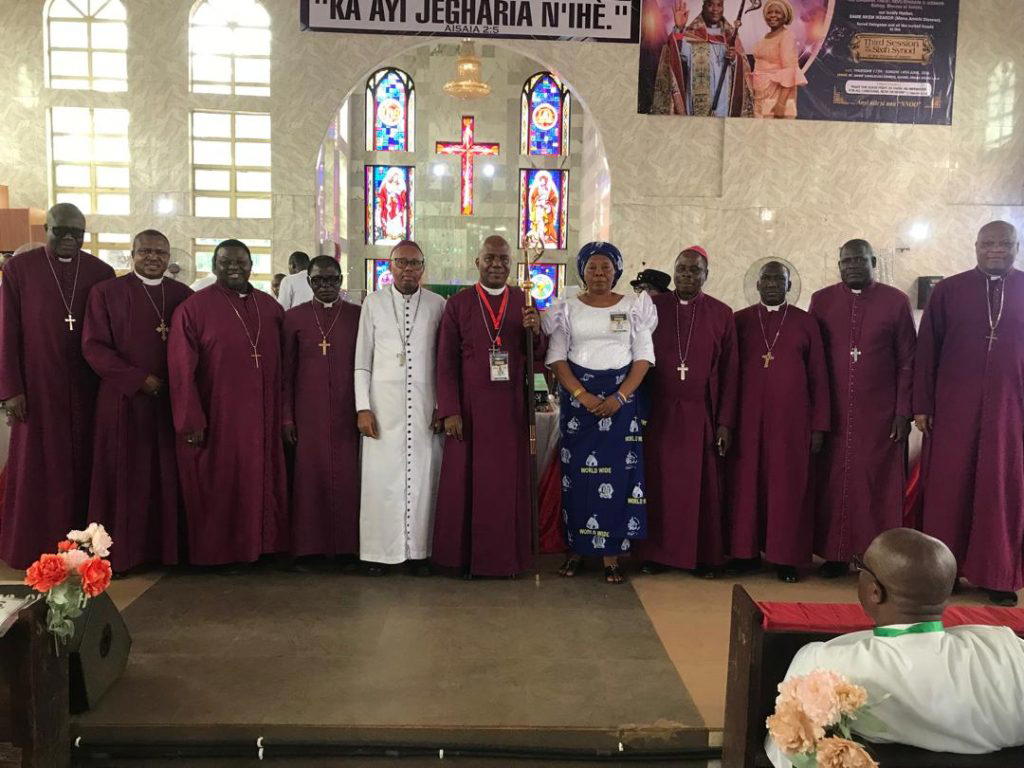
The position was made in the presidential address delivered by the Bishop of Amichi Diocese, Ephraim Ikeakor, at the Third Session of the Sixth Synod held at St James’ Anglican Church, Azigbo, Nnewi South Local Government Area of Anambra State.
The Synod, attended by more than 30 bishops across Nigeria, including the Archbishop of the Province of the Niger, Most Rev. Alexander Ibezim, had as its theme: “Fight the good fight of faith: An imperative for all Christians, now or never.”
Bishop Ikeakor criticised the worsening security situation in Nigeria, citing persistent killings, kidnappings and violence across several states, including Benue, Plateau, Borno, Zamfara, Kaduna, Kogi, Imo, Ebonyi, Enugu, Anambra, Oyo and Ondo.
He said the constitutional responsibility of government, as enshrined in Section 14(2)(b) of the Nigerian Constitution, is the security and welfare of the people, insisting that any administration failing in this duty has no justification to continue in office.
According to him, the rising insecurity has left Nigerians questioning the legitimacy and effectiveness of governance in the country.
The cleric also condemned political leaders who, in his view, have failed to fulfil campaign promises made during the 2023 elections but are now seeking re-election in 2027.
He described such politicians as “reprobate-minded” and accused them of lacking compassion for citizens, urging Nigerians to reject them at the polls.
Bishop Ikeakor further lamented the state of national development, alleging collapse in key sectors such as education, healthcare, infrastructure, justice, and the economy. He also criticised the handling of insecurity, describing the system as “woefully failed” in protecting lives and property.
He said Nigeria’s worsening economic conditions had pushed millions into multidimensional poverty, arguing that many citizens are now focused on survival rather than meaningful livelihood.
The bishop also faulted the political class for what he described as the weaponisation of poverty and the deepening of ethnic and religious divisions for political gain.
Referencing Nigeria’s founding challenges, he invoked Chinua Achebe’s There Was a Country, saying the nation’s current realities reflect a deep national crisis.
Bishop Ikeakor urged Nigerians, especially young people, to participate actively in elections and ensure their votes count, insisting that meaningful change remains possible through democratic engagement.
He concluded that Nigeria urgently needs a new direction in leadership to avert further decline and restore public trust in governance.