By Ibrahim Hassan-Wuyo
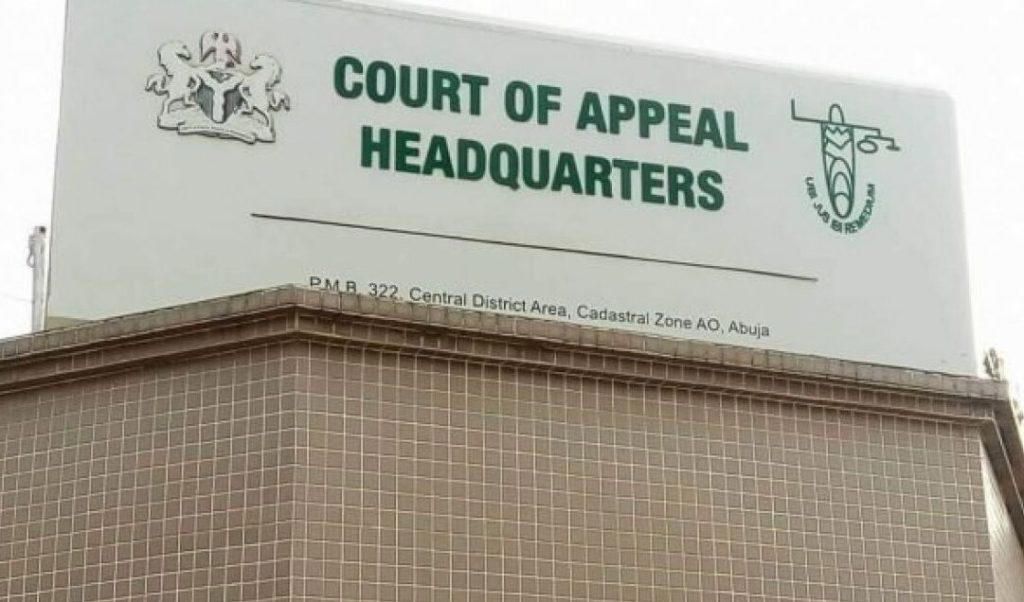
The Court of Appeal sitting in Kaduna has dismissed an application for stay of execution filed by Alhaji Mahmood Sani Sha’aban in a judgment debt dispute involving businessman Alhaji Umar Faruk Abdullahi.
The application sought to stop the enforcement of an earlier judgment of the Kaduna State High Court, which approved the auction of certain assets linked to Sha’aban to satisfy a debt arising from a contractual agreement between the parties.
At the hearing, counsel to the appellant, Mrs. Halima Fumilola Olodo, urged the appellate court to grant a stay of execution and an extension of time, arguing that her client should be given an opportunity to settle the outstanding obligation without the sale of assets.
Counsel to the respondent, Abdullahi Yahya, SAN, opposed the application, contending that the appellant failed to comply with procedural requirements governing appeals. He further argued that the appellant had not adhered to the repayment timeline contained in the lower court’s judgment.
Yahya also urged the court to award costs against the appellant, citing what he described as unnecessary delays in the enforcement of the judgment.
In a ruling delivered by Justice Onyekachi Aja Otisi, the Court of Appeal dismissed the application on grounds of non-compliance with the rules regulating appeals before the court. The court also awarded costs of N200,000 against the appellants.
Speaking after the proceedings, Yahya said the ruling had cleared the way for the enforcement of the High Court judgment, including steps toward the auction of assets covered by the execution order.
Counsel to the appellant, Mrs. Olodo, confirmed that the application was dismissed due to non-compliance with certain procedural requirements governing appeals at the Court of Appeal.
The dispute stems from a loan agreement executed in 2018 between Sha’aban and Abdullahi. Court documents presented during the proceedings indicate that the agreement involved financial assistance allegedly provided to Sha’aban during legal difficulties he faced in Dubai, United Arab Emirates, in the same year.
According to documents tendered before the court, the arrangement involved the provision of $1 million and N11.2 million under terms said to be consistent with Islamic financing principles, with repayment expected within six months. The agreement was reportedly prepared and witnessed by legal representatives before being executed by the parties.
The respondent maintained that while part of the debt was repaid, an outstanding balance remained, leading to legal proceedings and the subsequent judgment of the Kaduna State High Court.
With the dismissal of the application by the Court of Appeal, the enforcement process arising from the lower court’s judgment is expected to proceed, subject to any further legal steps available to the parties.