My 4-point blueprint will unlock state’s agricultural, mineral potentials
•There is no faction in PDP; power belongs to the masses, not the elite
By Clifford Ndujihe, Politics Editor
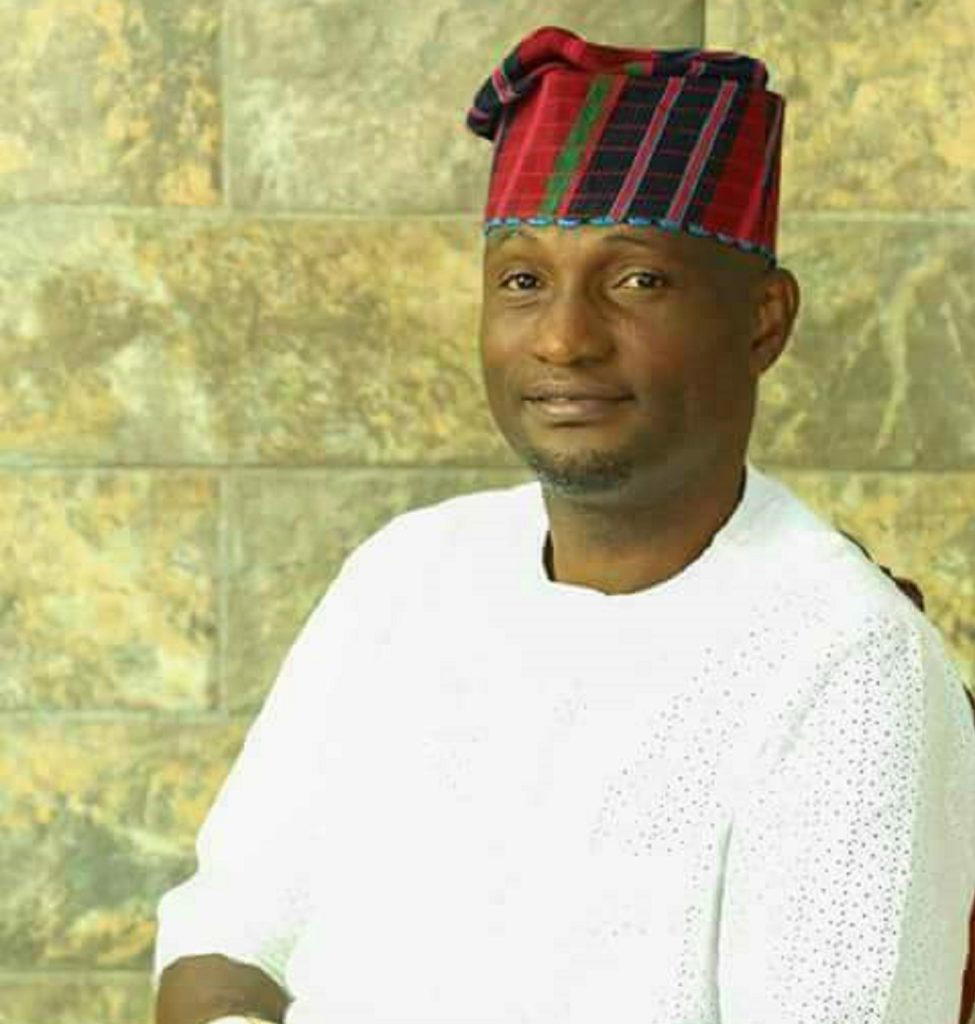
THE 2027 Governorship Candidate of the Peoples Democratic Party, PDP, in Ebonyi State, Chief Ifeanyi Odii, has promised to serve one term, reshape the socio-economic and political landscape of the state and quit.
In an interview in Lagos, Odii, who unveiled a four-point agenda aimed at rescuing the state from the shackles of poverty, insecurity, and infrastructural decay, said the greatest challenge of Nigeria is leadership; without the right people in positions of authority we cannot develop our nation..
Speaking on his vision, the self-made entrepreneur and corporate player detailed a strategic blueprint anchored on accelerated economic reform, development of agribusiness, solid minerals development, investment in healthcare, and unyielding enforcement of the rule of law.
Drawing deeply from his background in the private sector, Odii argued that unlocking Ebonyi’s dormant wealth requires a leader with verified global exposure, a vast network of investors, and a practical understanding of wealth creation.
Four-point economic blueprint
At the core of the candidate’s manifesto is an aggressive economic transformation designed to pivot Ebonyi away from over-reliance on federal allocation. Recognizing the shifting global dynamics, he noted that depending on crude oil is no longer sustainable for any forward-thinking sub-national government due to exorbitant production and logistics costs.
“As someone coming from the business sector, I know the foundational importance of a robust economy. Ebonyi State is immensely blessed with solid minerals, vast arable land, and premium tourist destinations. My intention is to drive a new economy by investing heavily in creative industries and establishing an enabling environment where the private sector can truly thrive.”
The agricultural revolution under his proposed administration will be strictly zone-targeted, leveraging the unique soil fertility of Ebonyi’s three senatorial districts. Rather than relying solely on traditional subsistence farming, the focus will shift to large-scale commercial cultivation and agro-processing, he said.
The blueprint identifies specific clusters for industrial-scale processing of yam, cassava, rice, and specialised starch. In particular, he emphasized the commercialisation of cassava for industrial ethanol and high-grade starch, alongside investments in specialised crop processing plants to serve the global textile, seasoning, and packaging sectors. While acknowledging Abakaliki’s historical reputation for rice, he maintained that current production levels remain grossly inadequate for a staple food with massive global demand.
Tackling poverty, insecurity, and power conundrum
The PDP flagbearer pointed out the direct, symbiotic relationship between severe economic deprivation and the rising tide of insecurity within the state. Citing demographic data, he lamented that Ebonyi ranks among the poorest states in the country, creating a fertile breeding ground for social vices and political manipulation.
To break this cycle, he said he would deploy advanced technology to secure communities while simultaneously tackling the root cause of crime: hunger.
Poverty and voting vulnerability index
“A hungry man is an angry man, and an angry man will go to any length to commit a crime,” he warned. “If you check the statistics, seven out of every 10 people in Ebonyi live below the poverty line. It is so bad that politicians can easily mobilise 100,000 desperate people by offering a mere N2,000 each. You cannot do that in places like Anambra, where even commercial motorcyclists earn sustainable daily incomes. Our focus is to convert Ebonyi natural assets into tangible benefits for our people through job creation, qualitative education, and a revitalized healthcare delivery system.”
Addressing the critical issue of electricity, which has chronically crippled local industries, the candidate promised a rapid overhaul powered by the recent constitutional amendments on electricity regulation. He cited his personal residence in Banana Island, Ikoyi, which runs 100 percent off the national grid, as proof that sustainable energy models are achievable with the right political will.
Within four years, he said his administration will tap into alternative energy sources, utilising agro-wastes such as rice husks, corn stalks, and cassava-derived biogas, alongside independent turbines. These installations will feed directly into newly established industrial parks, offering a guaranteed local market for independent power providers.
Zoning myth and why competence trumps sentiment
On the highly debated issue of zoning and the state’s traditional “charter of equity,” the PDP candidate clarified historical misconceptions, noting that the arrangement was never formally documented. He argued that whenever politicians face a deficit of competence, they resort to divisive narratives to whip up cheap sentiments.
Providing a historical breakdown of power rotation between the Abakaliki and Afikpo socio-political blocs, he explained that the capital was originally cited in Abakaliki with an understanding that the first democratic governor would emerge from the Afikpo axis,an understanding that was promptly discarded.
His words: “In Ebonyi State, part of us came from Anambra/Enugu (Abakaliki bloc) and the other part came from Imo (Afikpo bloc) which is where I’m coming from. When the state was created, it was agreed that if the state capital is in Abakaliki, the state governor should come from Afikpo but it didn’t happen that way.
“The state capital is in Abakaliki and the first governor was from Abakaliki too. So that agreement has never been followed and nobody has asked why it didn’t happen. Now, between Abakiliki and Afikpo blocs, looking at power since 1999, it means that Abakiliki bloc has been in power for 20 years, Afikpo bloc has been in power just for eight years. So who is actually short-changing the other? The current administration is from Abakiliki bloc. The charter of equity is not documented but even if it was documented, a charter of equity favours me as coming from Afikpo bloc.
“However, the only thing joining us together is the state. I am from Ebonyi State, I’m not contesting based on any zone. I am contesting because I am a bonafide son of Ebonyi State, who believes competence is what we need now not incompetence. I am a bonafide son of Ebonyi State, and I am contesting based on competence, not sectional sentiment. We cannot afford to choose incompetence over capacity just to satisfy an undocumented rotation. The masses are suffering, political parties are collapsing into our movement, and Nigerians are finally evolving past party labels to ask fundamental questions: Who are you? What have you done? What are you bringing to the table?”
On PDP, rule of law, and Federal Might
Responding to rumors of a structural split within the PDP, Odii dismissed the existence of any rival faction, describing such claims as mere propaganda aimed at distracting the electorate. He emphasized that the law recognizes only one PDP, whose leadership has fully transmitted his credentials to the Independent National Electoral Commission, INEC.
He maintained that internal party disagreements must be resolved strictly in accordance with the party’s constitution and judicial rulings, stressing that those operating outside the official platform are merely acting in defiance of valid court orders.
Regarding the national leadership of the party and the role of the FCT Minister, Mr Nyesom Wike, the candidate defended Wike’s involvement in President Bola Tinubu’s unity administration:
“Wike is working under the current federal administration and supporting Mr. President openly. He was appointed to do a job, and nobody can deny that the FCT Minister is performing excellently. As a party, we value performance. He supports the President at the centre, but that does not mean he supports the APC at the state level. There is a clear line.”
Defending the ballot and one-term pledge
Reflecting on the lessons learned from his 2023 electoral outing when as PDP standard bearer he came second to Governor Francis Nwifuru of the All Progressives Congress, APC, Odii identified late preparation and voter apathy as key vulnerabilities that his team has systematically corrected.
To combat the menace of vote-buying, he said his campaign has launched an extensive grassroots sensitization drive targeting market women, rural mothers, and uneducated youths.
The strategy focuses on shifts in voter mindset, showing people how accepting short-term financial inducements damages long-term infrastructure, healthcare, and their children’s future.
He expressed strong optimism in the Independent National Electoral Commission, INEC’s capacity to deliver a credible election but maintained that the ultimate responsibility lies with the citizens across the state’s 2,946 polling units. He urged registered voters to move past the defeatist mindset that votes do not count, which historically allows bad actors to manipulate outcomes when voter turnout drops to a meager 10 percent.
In a bold, unconventional political commitment, the entrepreneur vowed to break the traditional pattern of African governance by serving only a single term.
Asked where Ebonyi will be in 2031 under his watch as governor, if elected, he said: “I have told God and myself that I want to be the first governor who will not seek re-election after four years. I have already packaged everything I want to achieve for Ebonyi within that time-frame. Within two years, my achievements will speak for themselves, and the people themselves will see the transformation. I am putting my reputation on the line, and if I fail to deliver, let the truth stand against me.”