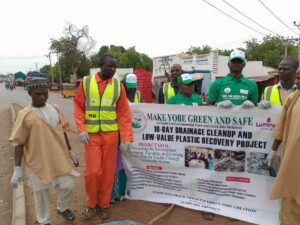
Abubakar Abdulmusawir, founder of the environmental and peace initiative Make Yobe Green and Safe, is using waste recovery and environmental sanitation as part of a broader strategy to address insecurity through youth engagement in Yobe State.
The initiative, established in 2020, combines environmental cleanup, recycling-focused activities and green job creation to support vulnerable young people in communities affected by unemployment, poverty and insecurity.
Abdulmusawir said the programme is designed on the belief that economic exclusion increases the risk of youth involvement in crime and violent groups, while structured engagement through environmental work can provide a safer alternative.
Its most recent intervention was a 10-day environmental recovery project supported by the Luminary Project, which combined large-scale plastic waste collection with youth mobilisation and community sensitisation activities.
During the exercise, more than 5 tons of plastic waste were recovered from drainage channels, streets and open spaces across participating communities.
The waste included polyvinyl chloride (PVC), polystyrene and low-density polyethylene (LDPE) sachet bags, which the organisation refers to as “unwanted plastics” due to their low recycling value and limited processing capacity.
According to the initiative, these materials are often neglected by informal waste pickers because of weak market incentives and inadequate recycling infrastructure, leading to long-term environmental buildup.
Abdulmusawir said the impact of plastic waste goes beyond environmental concerns, noting that blocked drainage systems and flooding worsen public health risks and deepen community vulnerability.
In addition to the cleanup exercise, the project facilitated the recovery of over 15 tons of waste through coordinated collection efforts, creating short-term green jobs for vulnerable youth and women.
Many participants were drawn from economically disadvantaged communities where unemployment remains a major challenge and insecurity continues to affect daily life.
Abdulmusawir said the initiative deliberately converts environmental work into a peacebuilding tool by offering income, skills development and structured engagement for at-risk youth.
“The vision of Make Yobe Green and Safe (MYGS) is rooted in the belief that peace and environmental protection are closely connected,” he said.
“When young people are meaningfully engaged through green jobs creation, they are less exposed to negative influences and more empowered to contribute positively to their communities,” he added.
He described the approach as “peace through green jobs creation,” arguing that environmental restoration and waste management can help reduce vulnerability in fragile communities.
The organisation said the model demonstrates how circular economy initiatives can deliver both environmental recovery and social stability, particularly in conflict-affected regions.
Abdulmusawir added that Make Yobe Green and Safe plans to expand the initiative across Nigeria, focusing on scaling green employment opportunities, strengthening waste recovery systems and integrating environmental programmes into wider peacebuilding and youth empowerment strategies.