The Federal Government on Tuesday night responded to the International Monetary Fund’s 2026 Article IV Mission Concluding Statement on Nigeria, welcoming the fund’s broadly positive assessment of the country’s economic trajectory while pledging to address recommendations on fiscal data integrity, budget transparency, and financial reporting standards.
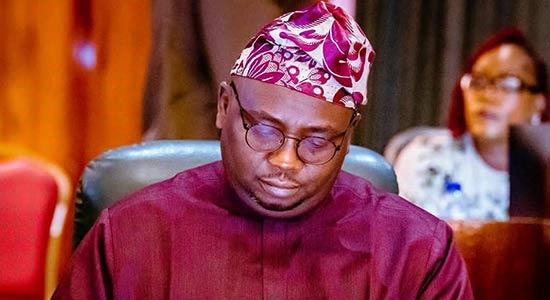
In a statement signed by the Minister of Finance and Coordinating Minister of the Economy, Mr. Taiwo Oyedele, the government said it was already taking concrete steps to strengthen fiscal data systems, improve inter-agency coordination, and deepen public financial management reforms in line with the IMF’s advice.
“We note the IMF’s recommendations regarding fiscal reporting, budget transparency, and data reconciliation. The Government is already taking steps to strengthen fiscal data integrity, improve coordination among relevant institutions, enhance transparency in budget execution, and deepen public financial management reforms,” the minister of finance stated.
The government reaffirmed commitment to maintaining macroeconomic stability, accelerating inclusive growth, strengthening fiscal discipline, deepening structural reforms, and improving the investment climate.
It said the ultimate objective of the reform programme is not improved economic indicators but better outcomes for all Nigerians — lower inflation, decent jobs, higher incomes, greater economic opportunity, and a better quality of life.
The IMF’s Article IV mission — the fund’s annual health check on member economies — found that reforms implemented over the past three years have yielded improved macroeconomic outcomes and enhanced Nigeria’s resilience to external shocks.
The fund specifically cited improvements in foreign exchange market functioning, stronger external buffers, ongoing fiscal and revenue reforms, banking sector resilience, and growing macroeconomic stability.
IMF noted that Nigeria faces global shocks with stronger policy frameworks and buffers than before, directly attributing the gains to the decision to end fuel subsidies, eliminate deficit monetisation, liberalise the foreign exchange market, and strengthen fiscal discipline.
It acknowledged that policies that the have been politically contentious but have significantly reduced economic vulnerabilities.
In its medium-term outlook, the Fund projects continued economic growth above four percent, improving external reserves, rising investment, and strengthening fiscal revenues.
Public debt has already declined relative to GDP, and reserve buffers have strengthened considerably — developments that complement recent sovereign credit rating upgrades by leading international rating agencies.
The government highlighted the IMF’s acknowledgment that Nigeria had demonstrated notable resilience in the face of fresh global headwinds. Recent conflict in the Middle East has triggered higher energy prices, rising food costs, tighter financial conditions, and disruptions to global supply chains — pressures that have rattled several emerging market economies.
Despite the turbulence, the statement noted that the foreign exchange parallel market premium has remained below five percent, sovereign spreads have stayed broadly stable, and investor confidence has been preserved.
The government added that Nigeria is well-positioned to benefit from higher energy prices through stronger export earnings, improved fiscal revenues, and increased foreign exchange inflows.
The government acknowledged the IMF’s finding that poverty and food insecurity remain significant challenges, even as it pointed to a near-10 percent rise in per capita income in 2025 as evidence of declining poverty levels. The statement emphasised that macroeconomic stability alone is insufficient and that growth must translate into tangible welfare improvements for ordinary Nigerians.
To that end, the government said it is scaling up targeted social protection programmes, including direct cash transfers to vulnerable households, support for small businesses, consumer credit initiatives, student financing through the Nigerian Education Loan Fund (NELFUND), and healthcare investments.
In agriculture, the government cited the Renewed Hope National Agricultural Mechanisation Programme as a key instrument for improving productivity, expanding irrigation and dry-season farming, and moderating food inflation while creating rural jobs.
The IMF also recognised Nigeria’s progress in domestic revenue mobilisation and public financial management.
The government said the successful implementation of new tax laws, the digitisation of revenue collection processes, and enhanced accountability mechanisms would continue to strengthen fiscal sustainability while creating a fairer and more efficient tax system.
The government said efforts are ongoing to improve fiscal reporting systems and ensure that Nigeria’s economic and fiscal statistics continue to meet the highest international standards — a direct response to the IMF’s recommendations on data reconciliation and reporting quality.
“While challenges remain, the direction is clear and the foundations are stronger,” Oyedele said.