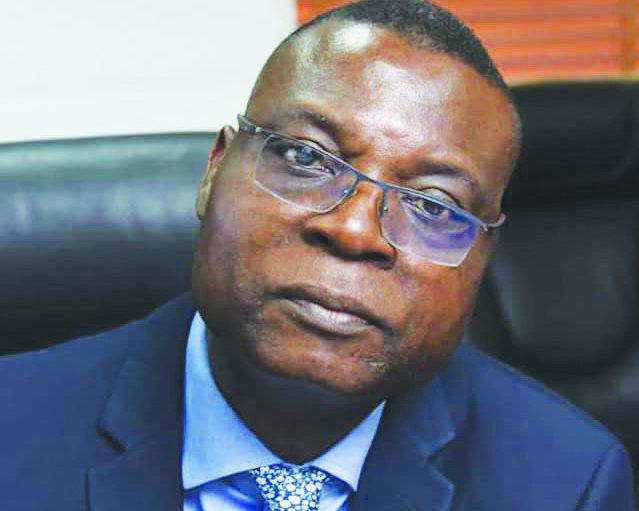
Michael Oladejo
When my National Youth Service Corps (NYSC) posting came out in 2007, the process still had a public ritual around it. You went to where the posting list was pasted, searched for your name, and then looked across the row to see the state that would shape the next year of your life. I do not remember now whether it was on a departmental board or another familiar campus wall, but I remember the feeling of looking for my name and seeing Maiduguri.
My first reaction was not excitement. Maiduguri felt far. Like many young graduates from the South West, I had quietly hoped for somewhere closer, somewhere familiar, somewhere easier to explain to family and friends. Borno sounded distant in every sense. It felt like a long way from Osogbo, from Lagos, and from the life I knew.
Then the journey began. I first travelled from Osogbo to Lagos, then continued from Lagos to Maiduguri by road, in one of those long-distance buses people commonly call Marco Polo buses. It took almost a full day, about 23 hours from Lagos, passing through several states and towns on the way north before arriving in Borno.
Looking back, what is striking is not the distance but the confidence with which we made the journey. We travelled across regions with no serious worry about safety. There was discomfort and fatigue, but fear was not the defining issue. Today, many Nigerians think carefully before making far shorter trips. Some families worry about NYSC postings. Some businesses think twice before moving goods through routes that once felt routine.
What I found in Maiduguri also changed my first impression. The city was not the distant abstraction I had imagined. It was a functioning place with people, culture, trade, learning, hospitality, movement, and ambition. People studied, worked, worshipped, traded, and planned their futures with a confidence that now feels historically important. The University of Maiduguri was not just an institution. It was part of a wider ecosystem of learning, commerce, public service, small business, transport, food trade, and professional aspiration.
That memory matters because it reminds us that insecurity is not abstract. It does not begin as a statistic. It begins when a place that once worked begins to lose normal economic life. People stop travelling. Markets close early. Schools become risky. Farmers cannot reach land. Traders avoid routes. Banks become cautious. Insurers reprice or withdraw. Government spends more on emergency response and less on development. A whole local economy starts functioning below its real capacity.
Maiduguri became the centre of a much larger national lesson. The post-2009 insurgency in the North East showed how quickly insecurity can convert a functioning regional economy into a zone of humanitarian need, rebuilding cost, and lost productivity. Since then, Nigeria’s security challenge has widened beyond insurgency. Banditry, kidnapping, farmer-herder conflict, oil theft, pipeline vandalism, separatist violence, and organised criminal activity now affect different parts of the country in different ways. The result is no longer only a matter for the police, military, or intelligence services. It is now an economic question.
Insecurity as National Economic Variable
The economy does not wait for total collapse before it starts pricing insecurity. It prices fear gradually: a road becomes more expensive to use, a farm harder to cultivate, a warehouse needs more guards, a lender raises the risk premium, a project is delayed because staff cannot travel, a state budget shifts toward emergency response, and a family sells assets to pay ransom or relocate. That is how insecurity enters the economy. It moves through production, logistics, labour, finance, investment, fiscal spending, human capital, and inflation. It is a hidden tax because it is paid in many places at once — in transport and insurance cost, food prices, project delays, lower farm output, weaker school attendance, higher security budgets, and lower investor confidence.
The evidence is already large enough. UNICEF’s 2023 study on the economic cost of conflict in North East Nigeria estimated that cumulative losses from the conflict were around US$100 billion. It also warned that, even under an optimistic outlook in which the effects of conflict gradually reduce over ten years, cumulative losses could still reach US$150 billion to US$200 billion over that period. That is not a local security incident. It is a development shock.
The World Bank’s recovery work in the North East tells the same story from another angle. It records that violent activities of Boko Haram and armed conflict since 2009 deeply affected the lives of about 15 million people across the region, with more than 20,000 killed and 2.2 million forcibly displaced at the time of that assessment. The 2016 Recovery and Peacebuilding Assessment estimated recovery and resilience needs at nearly US$6.7 billion.
Those figures should change how Nigeria thinks about insecurity. A country that loses output, human capital, infrastructure, food supply, private investment, and fiscal room to violence is not only suffering insecurity. It is compounding underdevelopment. The cost should be understood in three layers. The first is the direct cost: lives lost, property destroyed, farms abandoned, roads avoided, schools closed, and businesses disrupted. The second is the indirect cost: higher prices, weaker output, lower tax collection, more expensive logistics, and greater fiscal pressure. The third is the opportunity cost: the investment that never comes, the child who never returns to school, the market that never expands, the loan that is never approved, and the business that never scales.
Widening Geography of Risk
The North East remains central to the story, but Nigeria’s insecurity problem is no longer only a North East problem. The World Bank’s Nigeria overview, accessed on 4 June 2026, identifies banditry and kidnappings especially in the North West, continued insurgency in the North East, and separatist agitations in the South East as continuing challenges. That spread matters because different parts of the economy are being hit through different channels.
In the North East, the cost has been insurgency, displacement, damaged infrastructure, lost schooling, and a long recovery cycle. In the North West, banditry and kidnapping affect farming, rural trade, livestock movement, and local markets. In the North Central, farmer-herder conflict hits food supply, community trust, and land access. In the South East, separatist disruption affects trade, small business, and industrial confidence. In the Niger Delta, theft and vandalism affect crude output, public revenue, foreign exchange, and investor trust.
Food as First Cost Visible
The most direct economic channel is agriculture. Nigeria’s food economy depends on physical access to land, predictable movement of labour, functioning rural markets, safe storage, transport corridors, and trust between communities. Insecurity weakens all of them.
When farmers cannot reach farms, output falls. When herders and farming communities live under fear, conflict destroys both crop and livestock value chains. When roads are unsafe, produce moves late or not at all, and the cost of protection, levies, escorts, and spoilage enters food prices. When rural families lose harvests or flee, they move from production into dependency. This is why insecurity is now tied to Nigeria’s food crisis. The World Food Programme’s Nigeria page, accessed on 4 June 2026, says a record near-35 million Nigerians are facing acute food insecurity, driven by conflict, climate shocks, displacement, and the collapse of local food systems. It also says the North East, particularly Borno, Adamawa, and Yobe, remains the epicentre, with nearly 5.8 million people facing severe food insecurity in 2026 and 15,000 people in Borno expected to face catastrophic hunger and famine-like conditions.
FAO’s 2026 to 2028 Emergency and Resilience Plan for Nigeria reinforces the point. The plan requires US$347 million to support 12.6 million vulnerable people across the North East, North West, and North Central regions. It is built around emergency agriculture, resilience, agrifood value chains, job creation, and early warning — treating agriculture not as a welfare concern but as economic recovery infrastructure.
That is the correct framing. Insecurity in food-producing regions is inflationary. It reduces supply, raises distribution cost, increases uncertainty, and pushes households into more fragile coping strategies. Any serious anti-inflation strategy in Nigeria must therefore include security in agricultural belts. Monetary policy can respond to price pressure, but it cannot by itself reopen unsafe farms or secure rural roads.
Displacement Is Lost Labour, Demand
Displacement is often reported as a humanitarian statistic, but it is also an economic indicator. When people are displaced, labour leaves farms, workshops, markets, and local services; families lose assets, children lose school time, women lose market networks, and small firms lose customers and workers. Host communities face pressure on housing, food, water, health, and public services. WFP currently cites 2.3 million people displaced by violence and insecurity in the North East. IOM’s displacement tracking has similarly shown that large numbers of displaced people live not only in camps but also in host communities. That distinction matters because displacement does not sit outside the economy. It enters rental markets, food markets, casual labour, health systems, classrooms, and local government budgets.
The World Bank’s North East recovery material notes that the crisis damaged the social fabric, destroyed infrastructure, and left significant socio-economic needs unmet. That language is important. Insecurity does not only destroy physical assets. It destroys trust. It changes how people plan. It makes households more short-term, firms more defensive, and lenders more cautious. The economic cost of displacement also continues after people return. A farmer who missed planting seasons may have lost tools, seed, livestock, savings, and credit reputation; a trader returns to a shrunken market at lower scale; a young person who spent years out of school or work does not re-enter without loss. Recovery is slower than return.
Education Loss Is Future GDP Loss
Insecurity also damages the economy through education. This cost is slower, but it may be more dangerous. When schools close or parents fear sending children to school, the country is not only losing classroom time. It is reducing future productivity, employability, tax capacity, and social stability. UNICEF’s recent work in northern Nigeria has continued to show how insecurity disrupts access to education. A 2025 UNICEF-supported report on insecurity and access to education in Katsina, Zamfara, and Niger states recalled that over 11,000 schools were closed for four months in an earlier preventive response, disrupting education for about 1.3 million children. UNICEF and NRC also warned in 2025 that school closures across West and Central Africa had nearly doubled since 2019, with Nigeria among the countries reporting sharp increases.
This matters for economic policy because education is part of national infrastructure — not only a social service but a productivity pipeline. When insecurity keeps children out of school, Nigeria loses future workers, technicians, teachers, engineers, and taxpayers, and raises the risk of future insecurity by leaving young people outside the systems that build skills and hope.
Private Investment Prices Fear
Investors do not only study tax rates, exchange rates, or market size. They also study the security premium: whether staff can travel and goods can move, whether a project site stays accessible and insurers will cover the risk, whether the firm can supervise operations and collect receivables without excessive security cost.
This is how insecurity weakens investment before any formal announcement is made. Projects are delayed, scaled down, made too expensive, moved to safer locations, or never reach the board paper stage. Insecurity therefore reduces not only existing output but also future investment.
For a large economy seeking diversification, the geographic spread of insecurity across the North West, North East, and South East matters. It means insecurity is no longer one regional risk that investors can isolate. It has become a national operating variable.
This is particularly damaging for manufacturing, agro-processing, logistics, mining, hospitality, building activity, and retail. These sectors need movement, storage, local labour, power, transport, and community stability. Where security is weak, the cost of doing business rises before a single product reaches the consumer. The Fiscal Cost Is Bigger Than The Security Budget
The fiscal cost of insecurity is not limited to defence and police spending. That is only the visible line. The wider fiscal cost includes lost tax revenue, disrupted economic activity, rebuilding, humanitarian support, emergency procurement, social protection, lost school years, health pressure, and higher borrowing needs. When a market shuts, VAT is lost; when a farm is abandoned, income is lost; when oil theft reduces output, foreign exchange and revenue are hit; when schools close, future tax capacity falls; when households are displaced, relief spending rises; and when investors avoid a region, future tax bases fail to form.
Oil theft and pipeline vandalism show the point clearly. NUPRC reported in September 2025 that Nigeria’s crude losses had dropped to a 16-year low, with daily losses contained at 9,600 barrels per day in July 2025. That improvement is important and should be acknowledged. But the same NUPRC data also showed the scale of the problem Nigeria had been carrying: 37.6 million barrels lost in 2021, 20.9 million in 2022, 4.3 million in 2023, and 4.1 million in 2024. Even when the trend improves, the lesson remains. Insecurity around extractive assets is not only a law-and-order issue. It affects production, revenue, foreign exchange, investor trust, environmental damage, community livelihoods, and the credibility of national planning. For a country still dependent on oil earnings for foreign exchange and public finance, pipeline insecurity is a macroeconomic risk.
Movement Becomes Dangerous
Nigeria’s internal market is one of its biggest economic advantages. A business can produce in one state and sell across many others. Farmers, wholesalers, truckers, processors, retailers, and consumers are connected by roads, markets, storage points, and informal credit relationships. Insecurity attacks that network.
When a road becomes unsafe, the cost is not borne only by the person attacked. Transporters raise prices, traders reduce trips, perishable goods spoil, and farmers receive lower farmgate prices because fewer buyers are willing to travel. Some communities become commercially isolated, and the market becomes thinner.
This is why the economic cost of insecurity is often underestimated. Official figures may capture direct destruction, but they rarely capture fully the businesses never opened, the journeys never made, the farms never cultivated, the classrooms never attended, and the loans never approved.
Informal Economy Pays First
The formal economy can sometimes insure, relocate, write off losses, or pass costs to consumers. The informal economy usually cannot. That matters because much of Nigeria’s employment and daily commerce sits in informal activity: petty trade, food vending, small transport, artisan work, smallholder farming, market intermediation, storage, loading, repair work, and household-scale enterprise. When insecurity rises, the informal economy pays first and recovers last. A trader who cannot travel loses stock and customers. A farmer who misses a season may lose a year of income. A motor park that becomes unsafe loses daily cash flow. A rural market that closes early reduces the earnings of sellers, transporters, food vendors, loaders, and small service providers around it. A family that pays ransom may liquidate working capital, sell land, withdraw children from school, or cut productive spending. This is why insecurity deepens poverty even when the macro indicators show some resilience. The World Bank’s Nigeria overview says the economy grew by 4 per cent in 2025 and that reforms have helped stabilise the macro picture. But it also estimates that 63 per cent of Nigerians lived below the national poverty line in 2025, and that poor households spend up to 70 per cent of income on food. In that context, insecurity in food-producing areas is not a remote rural issue. It is an immediate poverty transmission mechanism.
It Changes Financial System
Insecurity changes the behaviour of banks, insurers, investors, and public lenders. The risk is not theoretical. It affects collateral quality, repayment probability, insurance claims, business continuity, operational risk, and the ability to monitor borrowers.
A bank may want to support agriculture or SMEs, but insecurity changes the credit file. Can the borrower operate through the season. Can goods move to market. Can the bank inspect collateral. Can the borrower insure assets. Can the lender recover in a stressed situation. If those answers are weak, lending becomes cautious.
The insurance sector faces the same problem. Insurance works best when risks are measurable and pooled. Insecurity creates correlated risks: many people, firms, assets, and routes can be affected together. That raises the cost of cover or reduces appetite. When insurance becomes expensive or unavailable, lenders become more cautious. The effect travels through the financial system.
For banks, insecurity also changes provisioning judgment. A loan that looks sound in normal conditions can deteriorate quickly if the borrower’s market closes, livestock is stolen, goods cannot move, or a major customer relocates. Expected credit loss models depend on probability of default, loss given default, collateral value, and forward-looking overlays. Insecurity affects all four. It can raise default probability, weaken recoverability, reduce collateral value, and force management to apply judgment where historical data no longer explains current risk.
For insurers, the challenge is pricing uncertainty without withdrawing from the places where protection is most needed; for investors, whether the return compensates for operational risk; for government, that every private risk premium eventually becomes a public development problem. When banks, insurers, and investors pull back from unsafe locations, those locations become more dependent on public intervention and humanitarian support.
For a consulting firm like BST, which works around risk, reporting, capital, and regulatory discipline, this is the point that matters: insecurity is now part of the country’s risk architecture. It affects expected loss, capital allocation, provisioning judgment, operational resilience, business continuity, and public-sector planning. It should therefore be analysed with the same seriousness given to inflation, exchange rates, or interest rates.
Historical Cost, Timely Response
The historical lesson from the North East is clear. Insecurity first destroys confidence, then livelihoods, then infrastructure, then long-term development. By the time the cost appears fully in reports, the damage has already moved through households, schools, markets, banks, budgets, and balance sheets. The 2026 Global Terrorism Index ranked Nigeria fourth among countries most impacted by terrorism. That should not be treated as a reputational embarrassment alone. It is an economic warning. Countries that remain heavily exposed to terrorism and organised violence pay through lower investment, higher risk premiums, deeper food insecurity, and weaker human development.
The March 2026 bombings in Maiduguri also carried symbolic weight. Associated Press reported that suspected suicide bombings killed at least 23 people and wounded 108 in Maiduguri, striking places including a major market and the entrance of the University of Maiduguri Teaching Hospital. For a city that had experienced relative calm in recent years compared with the worst period of the insurgency, the attack was a reminder that recovery remains fragile. That fragility is the economic issue. It is not enough for a place to be safer than it was at the peak of conflict. It must be safe enough for people to plan, invest, lend, insure, teach, farm, trade, build, and stay.
$1tn Dollar Economy Question
The Federal Government has continued to frame its medium-term development ambition around building a $1 trillion economy by 2030. In April 2026, the Federal Ministry of Budget and Economic Planning said the Medium-Term National Development Plan 2026 to 2030 includes that target and is designed to achieve double-digit GDP growth and expand the country’s economic base.
That ambition cannot be separated from security. A $1 trillion economy is not built only in cabinet documents, banking halls, ports, oil terminals, and technology hubs. It is also built on farms, roads, classrooms, markets, factories, mines, warehouses, and logistics corridors. If those places are unsafe, the target becomes harder before the first spreadsheet is opened.
The connection is direct. Insecurity weakens the domestic production the plan depends on; it raises food prices and weakens consumption; it pushes children out of school and erodes human capital; it raises transport and insurance costs and weakens trade; it damages oil output and investor confidence, hitting revenue and foreign exchange; and it makes banks more cautious, weakening the credit transmission Nigeria needs for SMEs, agriculture, and manufacturing.
This is why the economic cost of insecurity is probably still being undercounted. Nigeria can calculate the cost of a destroyed bridge, a burnt school, a damaged pipeline, or an abandoned farm. It is much harder to count the investor who quietly chose another country, or the farmer who stopped cultivating at full capacity because the road to market became unsafe.
If Nigeria wants a one trillion dollar economy by 2030, security must be treated as growth infrastructure. It is as relevant to the target as capital, power, exchange-rate stability, tax reform, and trade policy. A country cannot compound growth while insecurity is simultaneously subtracting from production, mobility, learning, revenue, and confidence.
The one trillion dollar target also requires employment at scale. The World Bank notes that Nigeria faces the persistent challenge of absorbing about 3.5 million people entering the labour force annually. That cannot happen if insecurity is shrinking rural production, weakening local markets, interrupting education, and making private investment more cautious. Job creation requires places where people can work safely, firms can operate predictably, and capital can stay long enough to earn a return.
Security Is Economic Policy
Nigeria needs to stop treating security as a separate file from economic management. The link is direct: if farmers cannot produce, food inflation stays harder to manage; if roads are unsafe, trade costs stay high; if schools are attacked, the future labour force weakens; if oil assets are vandalised, revenue and foreign exchange suffer; and if investors price fear into every decision, growth underperforms. This does not mean every economic problem is caused by insecurity. Nigeria also faces inflation, infrastructure gaps, energy constraints, policy uncertainty, weak productivity, and fiscal pressure. But insecurity multiplies each of them. It is a force multiplier for underdevelopment.
The response must therefore be economic as well as security-driven. Nigeria needs safer agricultural belts and transport corridors, better local intelligence, stronger policing, credible justice, closer federal-state coordination, and recovery programmes that rebuild livelihoods rather than only provide relief — alongside secured schools, safe return for displaced households, protected markets, and viable rural finance. Maiduguri’s story shows what Nigeria risks when peaceful commercial life is allowed to deteriorate. It also shows what recovery must mean. Recovery is not just fewer attacks. Recovery is when a student can study, a farmer can farm, a trader can travel, a lender can lend, an insurer can price risk, and a family can plan beyond survival. That is why insecurity is now one of Nigeria’s biggest economic costs. Until it is reduced, Nigeria will keep fighting inflation with one hand, chasing investment with one hand, rebuilding livelihoods with one hand, and losing productive capacity with the other.
.Michael Oladejo is Chief Executive Officer of BST Consulting Limited. He advises financial institutions on risk, finance, prudential reporting, IFRS 9, Basel, and regulatory transformation.