…FG must stop treating telecom data as mere background info
…Security must use telecom resources intelligently – Samson Ukpolo
…We have always provided critical details to security – NCC, telcos
By Prince Osuagwu, Hi-Tech Editor
After over two weeks, the 46 people, consisting of 39 students, some as young as two years old, and 7 teachers abducted in Oyo primary school by dare-devil kidnappers are still in their custody.
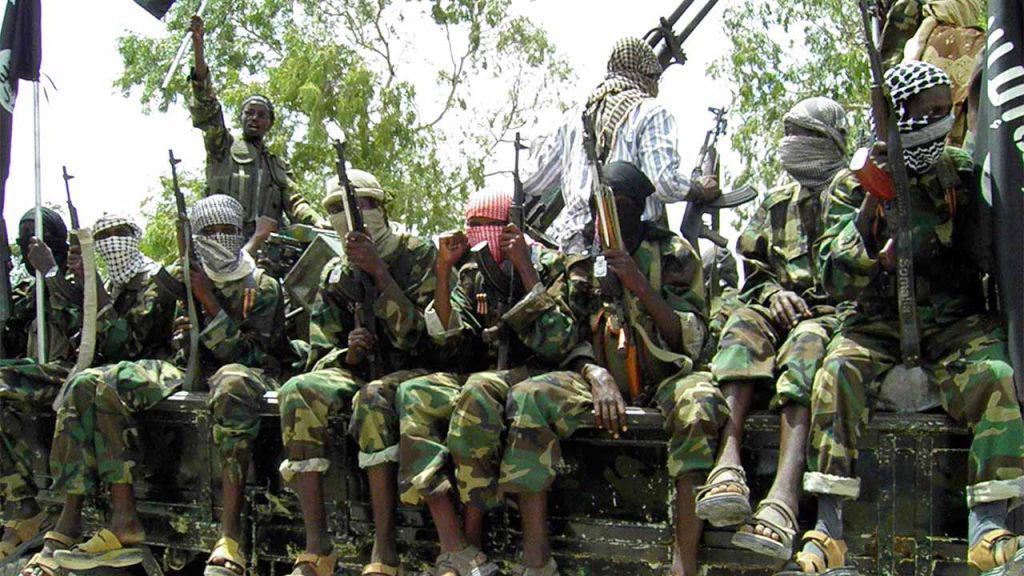
This is as insecurity continues to threaten lives, businesses, schools, highways, farms, and communities across Nigeria.
The gory torture pictures and videos coming from the bandits’ camp leaves a sore taste in the mouth of every discernible person.
Yet, it appears the bandits are overrunning the entire country when tech experts are saying it takes just deliberate application of technology solutions to nip the menace in the bud.
Globally, there is a growing consensus among technology leaders that future security challenges will increasingly require digital solutions.
Since 2021, former Communications Minister Isa Ali Pantami has continually advocated the use of technology solutions to check some of the crimes ravaging the country.
Pantami’s argument is that insecurity, unemployment and other national challenges can be addressed through digital technology, artificial intelligence, sound policy and infrastructure.
At the launch of a compendium documenting his achievements as former Director-General of NITDA and Minister of Communications and Digital Economy in Gombe State, recently, pantami also resumed the call, stating that “there is a solution to every challenge we have in Nigeria in technology.”
Echoing that position, another top telecommunication expert Mr Samson Ukpolo, has expressed surprise that a country like Nigeria is gradually succumbing to insurgence when it is described as one of the fastest growing telecom economies in the world.
He called on the Federal Government, security agencies, and telecom operators to strengthen their collaboration and use communication technology more effectively in tracking bandits, kidnappers, terrorists, and other criminal networks operating across the country.
But top officials of the Nigerian Communications Commission, NCc and telecom companies who spoke on condition of anonymity, told Hi-Tech that the problem is not about collaboration but about the will-power to utilise the benefits of collaboration.
They disclosed that whatever information security agencies and government had needed from them to nip insurgence in the bud, they have always provided.
But, Ukpolo said Nigeria’s security challenge has reached a point where conventional policing alone is no longer enough. According to him, the activities of bandits, kidnappers, armed robbers, terrorists, and criminal informants show that many of these groups rely heavily on mobile communication to plan attacks, demand ransom, coordinate movements, receive intelligence, and maintain contact with collaborators.
He stated that if criminals are using communication tools to commit crimes, then the government and security agencies must also be more deliberate, lawful, and strategic in using telecom infrastructure to expose, track, disrupt, and prosecute them.
He said: “Nigeria cannot continue to fight a modern security problem with outdated tools.
“Bandits communicate, kidnappers communicate, ransom negotiators communicate, informants communicate, Logistics suppliers communicate, and the question is not whether criminals are using phones and communication networks. The real question is whether the government is using the available telecom resources effectively enough to identify them, track them, and stop them before they cause further harm.”
Across the country, the impact of insecurity has become devastating. In many rural communities, farmers are unable to go to their farms because of fear of attacks. In some areas, villagers pay illegal levies to criminal groups before they can harvest their crops or remain in their ancestral homes. On major highways, kidnapping has become a nightmare for travellers. In some schools, parents are afraid of sending their children to boarding facilities because of repeated cases of mass abduction. In urban areas, armed robbery, cult violence, cyber-enabled fraud, and organised criminality continue to put pressure on law enforcement agencies.
Ukpolo said this reality demands a stronger intelligence-driven approach.
According to him, the government must begin to treat telecom infrastructure as a national security asset, not merely as a commercial service for calls, data, and messaging. He explained that telecom towers, SIM registration databases, call records, device identities, mobile money trails, emergency call systems, and network-location information can all become important tools in the fight against insecurity when used within the limits of the law.
He said: “Every serious kidnapping case begins with a lead. Sometimes that lead is the phone number used to call the victim’s family. Sometimes it is the device used to demand ransom. Sometimes it is the pattern of calls between the kidnappers and their informants. Sometimes it is the movement of a phone across different cell towers. If properly analysed, those communication footprints can help security agencies understand the network behind the crime.”
Ukpolo explained that while Nigeria already has SIM registration and NIN-SIM linkage policies, the problem is not only registration but the speed, accuracy, and coordination with which security agencies can make use of telecom data during emergencies.
He noted that in many cases, kidnappers call families repeatedly to demand ransom, give instructions, issue threats, and confirm payment arrangements. According to him, each of those calls creates a communication record that can help investigators.
“A ransom call is not just a phone call; it is an intelligence opportunity,” he said. “The number used, the device used, the location area, the call pattern, the people contacted before and after the call, and the SIM history can all provide useful information. But the information must be accessed lawfully, quickly, and professionally.”
He called for the creation of a National Telecom-Security Intelligence Fusion Centre, where authorised representatives of the Nigeria Police Force, Department of State Services, military intelligence, Nigerian Communications Commission, and mobile network operators can work together in real time on verified cases of kidnapping, terrorism, banditry, armed robbery, and other violent crimes.
According to him, such a centre would allow faster response when lives are at risk.
“If a child is kidnapped today and the kidnappers call the family, that phone number should not sit for days before action is taken,” Ukpolo said. “There should be an emergency protocol. The security agency handling the case should be able to submit a verified request, and the telecom operator should have a lawful and rapid response desk that can help preserve and provide relevant information. Time is very critical in kidnapping cases.”
He, however, warned that the use of telecom data must never become an excuse for illegal surveillance, political intimidation, or abuse of citizens’ privacy. He said Nigeria must balance security with civil liberty.
“What I am advocating is not uncontrolled spying on Nigerians,” he said. “I am talking about targeted, lawful, intelligence-led use of telecom resources to fight violent criminals. There must be proper authorisation, clear documentation, judicial oversight where required, and strict penalties for any officer or agency that misuses telecom data.”
Ukpolo said one of the biggest weaknesses in Nigeria’s fight against insecurity is the lack of integration among agencies. He observed that the police, military, DSS, telecom operators, financial intelligence units, and state security outfits sometimes work in silos, thereby slowing down investigations.
He said: “Criminal networks are connected, but our response is often disconnected. A kidnap gang may have informants in town, logistics suppliers in another location, ransom collectors somewhere else, and armed men in the forest. If the agencies investigating them are not sharing information quickly, the criminals will continue to exploit that weakness.”
The telecom expert stressed that telecom intelligence should not be limited to SIM cards alone. He said criminals may discard SIM cards after using them, but they often continue using the same phones or devices. For that reason, he recommended stronger use of device identity tracking, particularly through the International Mobile Equipment Identity, commonly known as IMEI.
“SIM cards can be thrown away,” he said. “But every phone has a device identity. If a phone used in one ransom negotiation appears again in another criminal activity, investigators should be able to connect that pattern. A criminal may change SIM cards several times, but if the same device keeps appearing in suspicious communication, that is a major clue.”
Ukpolo also called for stricter enforcement against illegal SIM registration, pre-registered SIM cards, identity manipulation, and careless SIM sales. He said criminal groups often take advantage of weak registration practices to obtain SIM cards that cannot be easily traced to their real users.
He stated that the government must hold SIM registration agents, retailers, and telecom partners accountable where they fail to follow proper verification procedures.
“If a SIM is registered with fake information, the entire security process becomes weak,” he said. “The country must clean up the SIM ecosystem. Every SIM must be properly registered, and any agent involved in fraudulent registration should face serious consequences. Telecom operators must also continue to audit their registration channels to ensure compliance.”
On rural insecurity, Ukpolo said many bandit groups operate in forest areas, border communities, and remote locations where network coverage may be weak. He said this creates a double problem: victims may not be able to call for help, and security agencies may struggle to obtain useful network intelligence from those areas.
He urged the Federal Government to prioritise telecom expansion in security-risk areas, especially highways, farming communities, border corridors, mining locations, and forest-adjacent settlements.
“Network coverage is not only an economic development issue; it is also a security issue,” he said. “If criminals know that a particular road has no network, they can exploit that road for kidnapping. If a farming community has no reliable communication, people cannot quickly report an attack. Expanding telecom coverage in vulnerable areas can help save lives.”
He further recommended that telecom towers and fibre infrastructure be treated as critical national assets. He said vandalism of telecom facilities should be addressed with seriousness because every damaged tower weakens communication, business, emergency response, and security operations.
Ukpolo also spoke about the importance of emergency communication systems. He said Nigeria needs a more reliable and widely publicised national emergency response platform that allows citizens to report attacks, suspicious movements, kidnapping incidents, highway danger, and community threats quickly.
According to him, emergency calls should be routed to the nearest response command, and where legally permissible, location support should help security agencies identify the general area from which a distress call is made.
“In a country battling insecurity, emergency communication must be fast, simple, and reliable,” he said. “Many Nigerians do not even know which number to call during an emergency. The government must educate the public, strengthen emergency call centres, and ensure that reports are acted upon immediately.”
Ukpolo said telecom intelligence should also be combined with human intelligence. He explained that technology alone cannot defeat insecurity unless it is supported by community cooperation, local reporting, and professional policing.
“A community member may know that strangers are gathering in a certain area,” he said. “A local vigilante may notice unusual night movement. A telecom record may show suspicious communication from that same area. When human intelligence and telecom intelligence are combined, security agencies can build a stronger case and respond more effectively.”
He added that traditional rulers, community leaders, transport unions, market associations, farmers, and local youth groups all have roles to play in reporting suspicious activities. However, he warned that such reports must be handled responsibly to avoid false accusations, ethnic profiling, or mob justice.
On the role of police investigators, Ukpolo said many officers need stronger training in digital evidence, telecom records, cyber investigation, and intelligence analysis. He said it is not enough to obtain call records; investigators must know how to interpret them, preserve them, and use them properly in court.
“Telecom data is powerful, but it must be handled professionally,” he said. “If the evidence is not preserved properly, if the chain of custody is broken, or if investigators cannot explain the connection between the data and the suspect, the case may collapse in court. We need to train police officers and prosecutors on how to use digital evidence effectively.”
Ukpolo also recommended deeper collaboration between telecom companies and financial intelligence agencies because ransom crimes often involve both communication and money movement. He said while many ransom payments may be made in cash, phones are still used to negotiate, coordinate, direct, confirm, and organise collections.
“The phone number used to demand ransom should not be examined in isolation,” he said. “Investigators should look at who the number communicated with, what device it used, whether the device has used other SIMs, whether the same contacts appear in other criminal cases, and whether there are financial or logistics connections. Criminal networks are not built around one phone call; they are built around patterns.”
He stressed that Nigeria must invest in technology, but also in discipline and accountability.
According to him, even the best technology will fail if security agencies delay, refuse to share information, leak intelligence, or compromise investigations. He said officers who leak operational information to criminals should face severe punishment.
“One of the painful realities is that some criminals have informants,” Ukpolo said. “If telecom intelligence is gathered and then leaked to the same criminals being investigated, the entire system fails. That is why access must be controlled, monitored, and audited. Only authorised officers should handle sensitive intelligence, and every access should leave a record.”
The telecom expert said the government must also invest in public confidence. He explained that citizens are more likely to report crimes when they trust that their identity will be protected and that the police will act professionally.
“Insecurity is not only a security problem; it is also a trust problem,” he said. “People will not report criminals if they believe their information will be exposed. The government must protect whistleblowers, protect victims, and protect community informants.”
Ukpolo concluded by saying that Nigeria has the tools to fight insecurity more effectively, but the country must bring those tools together in a coordinated system.
“Nigeria has telecom networks, SIM databases, device records, emergency call systems, identity platforms, security agencies, and millions of citizens willing to live in peace,” he said. “What we need now is coordination. We need speed. We need lawful access. We need trained investigators. We need accountability. We need to turn communication infrastructure into a strong security advantage.”
He said the fight against banditry and kidnapping must be urgent because every delay costs lives, weakens communities, and emboldens criminals.
“The government must understand that every phone call made by a kidnapper is a possible doorway into the criminal network,” Ukpolo added. “Every suspicious SIM, every repeated device, every ransom communication, every unusual call pattern, and every movement across high-risk locations can become a lead. If Nigeria uses telecom resources intelligently and lawfully, security agencies can rescue victims faster, expose collaborators, disrupt criminal groups, and restore public confidence.”
For Ukpolo, the message is clear: Nigeria must stop treating telecom data as ordinary background information and start treating it as a vital instrument in the national fight against insecurity. According to him, bandits and kidnappers may continue to adapt, but a serious, technology-driven, intelligence-led government response can make it harder for them to operate freely.