From last week continues the narrative about creation of new states in Nigeria.
While serving in Ikeja Garrison, his second in Command was Lt-Colonel Shehu Musa Yar’adua (5 March 1943 – 8 December 1997) who later became number 2 man in the country after General Murtala’s assassination in February 1976. Brigadier Ally’s ADC was Colonel Lawan Gwadabe (77), who later became the Military Governor of Niger State.
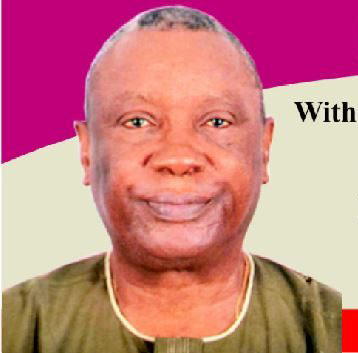
Brig Godwin Gregory Aja Ally was born on 1st January, 1940 in Ukwortung-Utugwang in Obudu Local Government Area of Cross River State to Pa Ally Atem and Ma Unwanyi Ally farmer and trader respectively.
He grew up in Zaria with his late elder brother Corporal Ulim Robinson Ally who was a soldier. As an intelligent boy in the barracks, he excelled in his primary school education and was enlisted into military institutions and went through several military schools and courses. His brilliance aided his military career with several positions and promotions until he retired voluntarily with the rank of Brigadier at the age of thirty-six years in 1976.
His closest friend and colleague during his career and after retirement was Brig Emmanuel Ikwe (Rtd). He got married to his Danish wife, Mrs Sonja K.R. Ally on 5th May, 1963. The marriage was blessed with two sons and two daughters. Mrs S.K.R. Ally retired a few years ago and has travelled back to Denmark for health reasons.
He was a member of Supreme Military Council; he was acting Military Governor of Lagos State; Commandant, Army Garrison, Bonny Camp; he was Chairman of Nigeria Port Authority, 1976-1979; he was Chairman Ikoyi Golf Club, Ikoyi-Lagos; he was Chairman, Nigeria Newsprint Manufacturing Company (NNMC) Oku Iboku in Akwa Ibom State; Chairman, Obudu Cattle Ranch and Member, Lions Club International.
Brig G. G. A. Ally passed away on 5th September, 1997 at the age 57 and was buried in his ancestral home where he was born (Ukwortung-Utugwang, in Obudu Local Government Area of Cross River State).
Ogoja area deserves to be a state. And the demand for the creation of Ogoja state has been outstanding. The area is landlocked like many areas in Nigeria and too far from Calabar the state capital. On a good road, the trip from Ojoja to Calabar will take at least seven hours. It is even closer to Makurdi, the Benue state capital.
Obudu cattle ranch is situated in Ogoja which is a tourist attraction and consist of many tribal units. These include Ishibori (this village has different clans such as Uhmuria, Ikaptang, Ikajor, Ishinyema, Ikariku, Imerakorm) and Igoli as the central town.
Mbube, being one of the major tribes, comprises different villages, including: Odajie, Ekumtak, Idum, Ojerim, Egbe, Ogberia Ogang & Ogberia Ochoro, Oboso, Benkpe, Edide, Bansan, Aragban, Nkim, etc. Their major source of livelihood is subsistence agriculture, basically farming of cassava, yams, palm oil, palm wine etc.
Ekajuk is one of the major clans in Ogoja Local government area. It is divided into Ward I and Ward II, and includes major communities such as Nwang, Ekpogrinya, Esham, Egbong, Nnang, Ewinimba and Bansara (which are collection of a group of villages).
The demand for states creation and restructuring should be part of the agenda of the next President of Nigeria. The first task will be to amend the Constitution, so that these issues will be better handled than the tight grip in the 1979 and 1999 Constitutions introduced by the military.
The 1979 Constitution made adequate provision for steps to be taken before states could be created. They are contained in Section 274 of the suspended Constitution. The same provisions are contained in Section 8 of the 1999 Constitution. Let’s face it, these provisions are insurmountable hurdles and they have been exploited since 1999, by the political class, especially by those who have occupied the positions of Deputy Senate President and deputy Speaker of the house of Representatives for financial gains.
All that should be done by the next elected President is to amend the Constitution so as to lower these hurdles that have made it impossible for states to be created and restructuring equally impossible and other issues. That should be the task of the next President of Nigeria.
Eric Teniola, a former director at the Presidency wrote from Lagos.