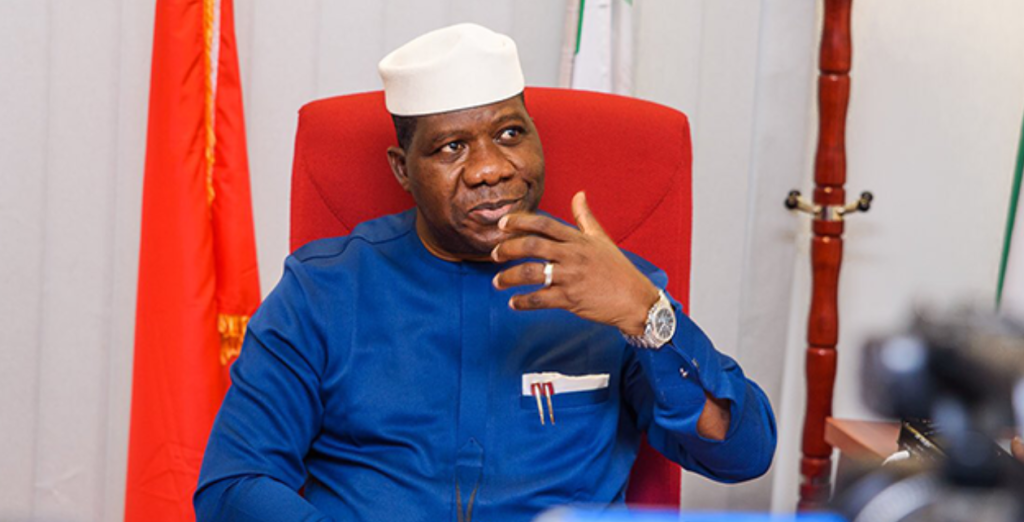
The minister of Petroleum Resources (Oil), Heineken Lokpobiri, has directed ministry directors and civil servants to produce a concrete implementation plan to raise Nigeria’s oil output to 2.5 million barrels per day, stressing that durable gains depend on civil service ownership and a clear, time-bound roadmap.
Delivering the keynote at a management retreat themed “Driving institutional performance and accountability in the petroleum sector for sustainable national development,” Lokpobiri said recent production gains must be translated into sustained growth through coordinated policy, targeted investment and operational follow-through.
“At the end of the day, I want to see on my table a clear framework on how we can build on what we have achieved. I want to see how we can do 2.5 million barrels a day,” he told directors, agency heads and ministry staff.
Lokpobiri highlighted progress since his appointment nearly three years ago, saying daily oil output has risen to about 1.8–1.9 million barrels per day inclusive of condensate — a rise he described as an “over 80 per cent improvement” relative to earlier baseline figures.
He added that gas production is around one billion cubic feet per day and that foreign-exchange reserves have recovered to above $50 billion, the highest in 17 years.
Despite these gains, the minister warned Nigeria remains “nowhere where we want to be,” pointing to unexploited reserves and limited exploration beyond the Niger Delta.
He cited historical estimates — including a frequently quoted figure of roughly 37 billion barrels of oil (based on older surveys) — and argued that the country has only explored an estimated 20–25 per cent of its potential hydrocarbon prospects.
Lokpobiri pressed civil servants to prioritise measures that directly affect upstream output: re-entering shorted or shut wells, accelerating drilling programs to offset natural decline rates (he noted average annual decline rates of producing wells), and commissioning fresh seismic surveys to identify new reserves.
He said decades of underinvestment in seismic and exploration had left many basins under-mapped, and pledged that the government is committed to expanding technical appraisal work.
“Every well has a 10 per year decline every year. And that’s why you need to also drill more and more wells,” the minister said, urging technical departments to produce implementation steps, timelines and budgeted milestones that can be monitored.
He described ministers as temporary occupants of the ministry while civil servants are the “barracks” that remain, calling for public servants to “buy in” and take ownership of programmes so policies outlast political cycles.
He instructed directors to turn retreat discussions into a workable, accountable plan and recommended more frequent coordination meetings among ministers, department secretaries and directors — drawing on his past experience in agriculture where monthly meetings improved responsiveness.
The minister argued that legal certainty and policy stability are key to attracting capital. “Capital is directed to where there is stability, capability and a stable legal framework,” he said, noting increased investor interest from Japan, India, Europe and the United States.
He credited recent reforms and inter-agency collaboration for returning Nigeria to the spotlight as an attractive investment destination, but warned that gains could be lost without a coherent pathway forward.
Lokpobiri also touched on the global energy environment, saying the debate has shifted from “energy transition” to “energy emergency” following supply shocks elsewhere. He said oil and gas will remain principal components of the global energy mix for the foreseeable future and urged policy choices that optimise Nigeria’s comparative advantage in supplying both oil and gas to global markets.
The minister urged officials to move exploration beyond the traditional Niger Delta focus, including shallow water and onshore basins that remain underexplored.
He said attention to land, salt, and shallow-water plays — along with investment in seismic technology and data acquisition — will be necessary to expand reserves and discover new fields.
Lokpobiri insisted the retreat should not be “just a talk show.” He asked attendees to deliver a clear, time-bound framework with measurable outputs and hand it to him for follow-up. He emphasised monitoring and accountability, including regular meetings to resolve problems and ensure timely implementation of decisions.
The retreat, the ministry’s first in three years, brought together directors, agency staff and other officials. Lokpobiri closed by urging participants to translate discussion into deliverables and to ensure the civil service drives implementation after the retreat ends.