By Chioma Obinna
In one community of Osun State, a free vocational centre is pulling vulnerable girls from the brink of child marriage, teenage pregnancy, and street life while giving hundreds of out-of-school youths a second chance at life.
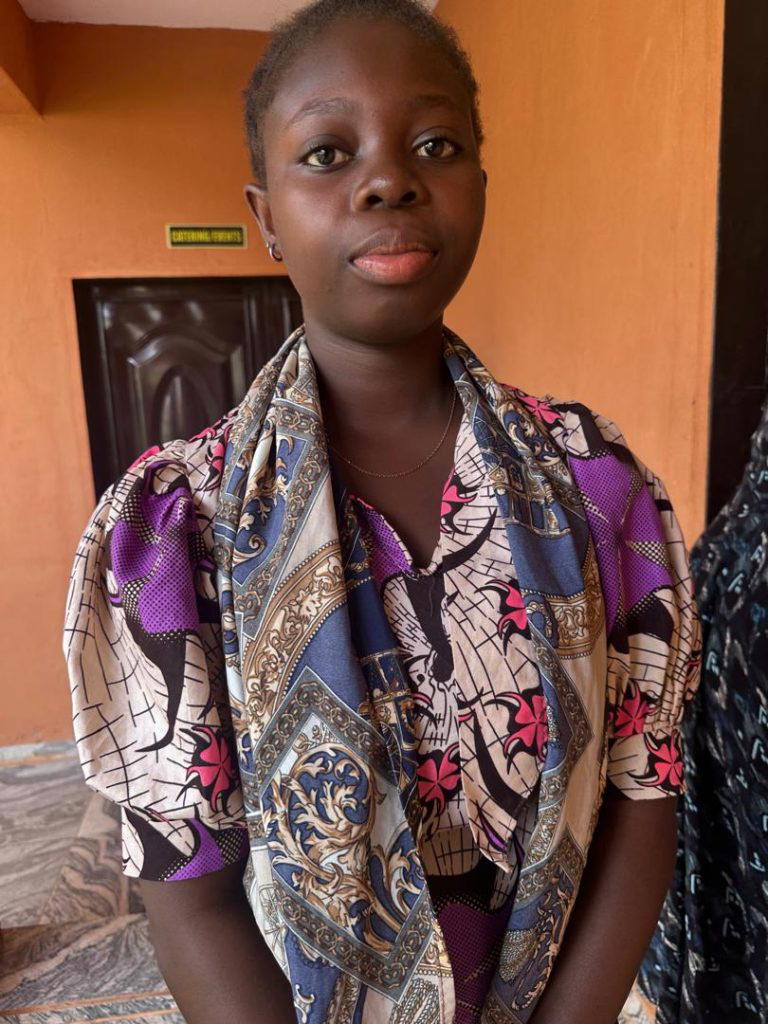
At 18, Yemisi Ayoola should have been preparing for her senior secondary school examinations. Instead, she was sitting at home, watching her dreams slowly slip away.
Each morning, she watched other children leave for school while she remained behind, trapped by circumstances beyond her control. Poverty had forced her out of the classroom after Junior Secondary School Two (JSS11).
Her parents could no longer afford the cost of keeping her in school, and the future she once imagined suddenly seemed distant.
“My classmates are preparing for their WAEC. I keep wondering what will become of me,” she told Sunday Vanguard with tears.
For months, she wondered what would become of her.
Like millions of Nigerian children whose education is interrupted by financial hardship, Yemisi found herself caught between hope and uncertainty. The days stretched into weeks, and the weeks into months. With little to do and nowhere to go, she feared becoming another statistic in a country struggling with one of the world’s largest populations of out-of-school children. According to recent national data, Nigeria houses nearly 20 million out-of-school children, one of the highest figures globally.
Then an unexpected opportunity arrived. A neighbour told her about a free vocational training centre in Ilesa, Osun State, where vulnerable young people could learn practical skills at no cost.
That conversation changed everything.
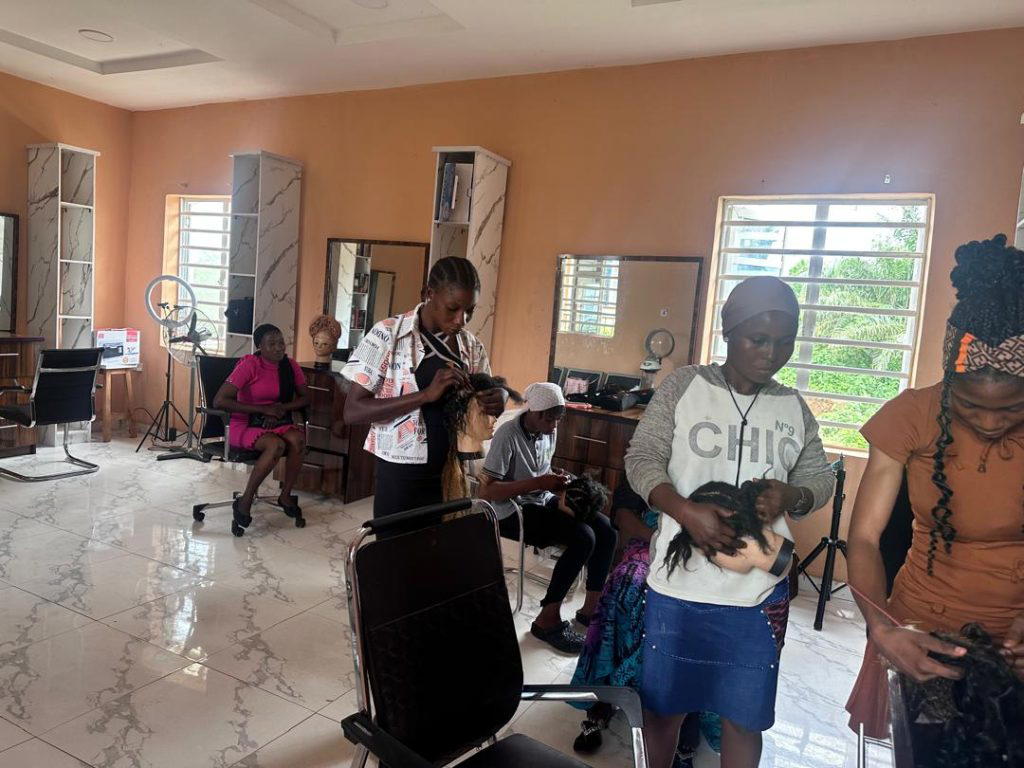
Today, Yemisi spends her days learning makeup artistry and hairdressing at the Princess Ruth Aina Ataiyero Skills Acquisition Centre. Though she still dreams of returning to school, she now speaks about the future with renewed confidence. “If the government can help me go back to school, I will be happy,” she said quietly.
For a teenager whose ambitions were nearly buried by poverty, the centre has become more than a training institution. It is a lifeline.
But her story is far from unique. Across Nigeria, millions of children remain out of school, creating one of the world’s largest out-of-school populations.
According to Harold Kpojime, Education Specialist with UNICEF Nigeria, recent nationwide data suggests that nearly 20 million Nigerian children are out of school.
He noted that one in every three primary school-age children is currently not in the classroom, underscoring the scale of a crisis that continues to rob millions of young people of educational opportunities.
Today, millions of children remain out-of-school due to poverty, family instability, and limited access to educational opportunities. Behind the statistics are real lives interrupted by hardship, dreams deferred, and young people forced to grow up faster than they should.
For many girls and boys, dropping out of school can lead to child labour, early marriage, teenage pregnancy, and economic dependence.
At the Princess Ruth Ainu Ataiyero Skills Acquisition Centre, however, those grim realities are being challenged one life at a time.
One of those lives belongs to 18-year-old Ayelayem.
She stopped schooling in Junior Secondary School One and spent years moving between relatives and neighbours. Without an education or clear direction, her future appeared uncertain.
Then she heard about the centre. “I got the form and started in January,” she told Sunday Vanguard.
Today, she is learning makeup artistry and hairdressing and speaks with a confidence that was once missing.
“I feel happy. I feel better,” she said.
Again, Kpojime said poverty remains one of the strongest drivers of school exclusion in Nigeria. While basic education is officially free, many families still struggle to pay for uniforms, transportation, learning materials and feeding. “Many parents simply cannot afford these costs,” he said, noting that economic hardship continues to push vulnerable children out of school and into work, street trading, or prolonged idleness.
The challenge becomes even more pronounced for adolescent girls. According to Kpojime, children between the ages of 12 and 14 face increasing risks of dropping out of school, particularly girls. Factors such as poverty, stigma, household responsibilities, early marriage and social pressures often combine to force many young girls out of the classroom long before they complete their education.
For the Centre Director, Gladys Olanubi Fadahunsi, stories like Ayelayem’s explain why the initiative exists. According to her, many of the young women who arrive at the centre are victims of circumstances beyond their control.
“Some of them became pregnant very early. The person responsible may not even be there for them. After the pregnancy, they have nothing to do. We encourage them to come here, learn a skill, become independent and be able to feed themselves.”
Her voice reflects both concern and determination. “We tell them it is not the end of the world. After learning a skill, they can still pick up their pen and go back to school.”
When Sunday Vanguard visited the centre alongside over 40 journalists during a field trip organised by the United Nations Children’s Fund, UNICEF in collaboration with the Osun State Ministry of Education, recently, inside the classrooms, stories of interrupted dreams sit side by side with stories of resilience.
Nineteen-year-old Janet Owosekun completed secondary school in 2022 but spent the following year working as a salesgirl because there was no money for further education.
Watching her peers move ahead while she remained behind was difficult. Rather than surrender to frustration, she seized the opportunity offered by the centre. “I saw this as an opportunity,” she said.
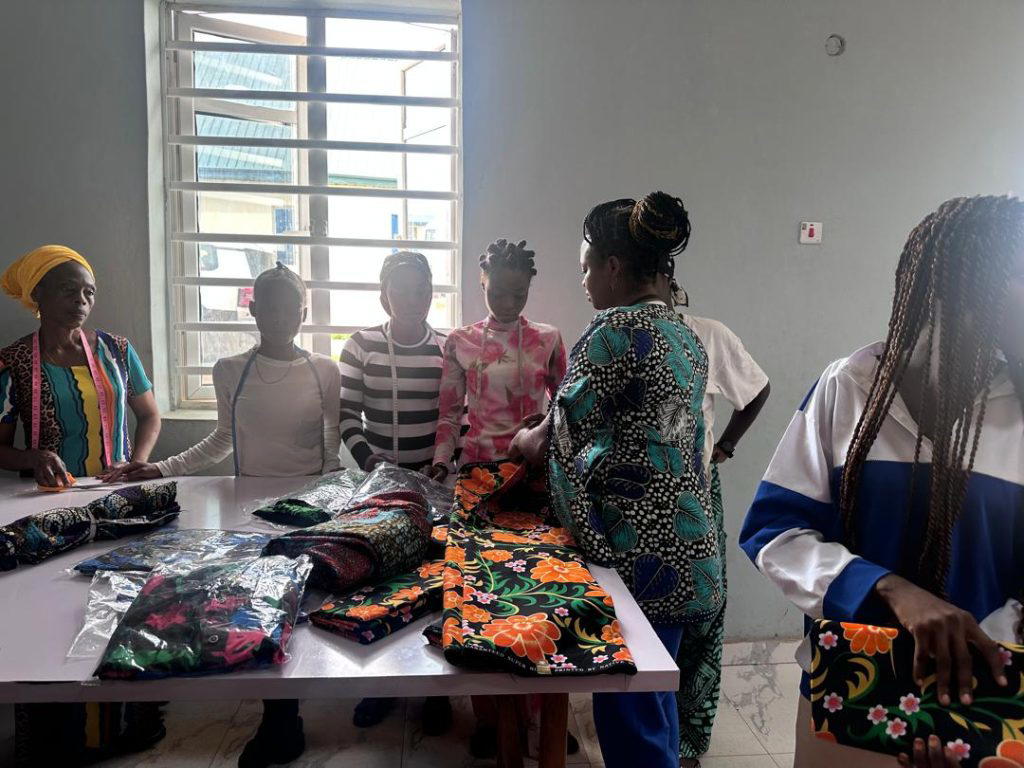
In just four months, she has learnt the basics of fashion design and now dreams of owning her own fashion business.
“If admission doesn’t come immediately, I want to continue learning until I become a professional and have my own shop.”
Like Janet, nearby, 21-year-old Olajide Oluwashiri concentrated on perfecting her hairdressing skills. She completed secondary school years ago but has been unable to pursue higher education.
“My mother doesn’t have money,” she said in a low tone.
Her words captured the reality faced by countless Nigerian youths whose ambitions are limited not by talent or determination but by economic hardship.
For Olajide, the free training programme has opened a path towards financial independence. “My mother did not pay anything here.”
However, the centre’s impact extends beyond girls. Sixteen-year-old Adekunle Iseoluwa recently completed his secondary school examinations. Rather than spending months idle while waiting for the next stage of his education, his parents enrolled him in ICT classes.
“They don’t want me sitting at home doing nothing,” he said.
Already, he has learnt typing, document formatting and basic computer skills that he believes will help him navigate an increasingly digital world.
For 17-year-old Salvation, the experience has been even more transformative.
The aspiring graphic designer speaks enthusiastically about artificial intelligence and digital creativity.
Through the Nigerian Learning Passport and AI-powered learning tools, he now creates graphics, generates digital content and explores new possibilities in technology.
“My parents were surprised by what I could do,” he said. “I can ask AI questions like I am talking to a real person.”
His excitement reflects a growing effort to ensure that vulnerable young people are not left behind in the digital revolution.
His new skill is not unconnected with the centre’s recent partnership with the Osun State Ministry of Education and UNICEF’s Nigerian Learning Passport, (NLP) programme, exposing learners to thousands of educational resources and emerging technologies.
Another remarkable sight to behold at the centre, is tailoring class where 62-year-old Victoria Olushola sits beside students young enough to be her grandchildren.
Decades ago, poverty forced her to abandon tailoring before completing her training.
For years, the dream remained unfinished.
When she heard that the centre offered free lessons, she decided it was not too late to begin again.
“I came here to learn more,” she said.
Like the saying, her presence is a reminder that poverty can delay dreams, but it does not always destroy them.
Founded by philanthropist Sir Prince Chief Samson Ataiyero in memory of his late wife, the centre provides free vocational training in fashion design, ICT, catering, event planning, plumbing, hairdressing, makeup artistry and entrepreneurship.
According to the Centre Director, no student pays tuition. “The form is free. The training is free. The practicals are free. Everything is free,” she said.
Last year, the centre graduated 48 students, about 70 per cent of whom were out-of-school youths. Some of the most vulnerable beneficiaries received equipment and business support to help them start earning a living.
But the need remains far greater than the available resources. “We are handicapped,” Fadahunsi admitted. “If we get more support, we can empower many more of them.”
Corroborating her views, the Administrative Assistant to the Bishop of the Ilesa Anglican Diocese, Ven. Akindu Ajayi, said: “We have Christians and Muslims here. We have people from different backgrounds,” he says. “Our goal is to reach and empower many more youths.”
In a country battling rising poverty, unemployment and a growing number of out-of-school children, the stories emerging from the centre offer a glimpse of what is possible when compassion meets opportunity.
Meanwhile, the State Government is set to collaborate with the centre. Recently, about 97,000 school children have been enrolled on the Nigeria Learning Passport (NLP) and Passport to Earn (P2E) platforms in Osun State. The measure is also a part of strategy to improve learning, as well as provide digital skills for children in the state as well as to reduce the number of out of school children in the state.
For Yemisi, the dream of returning to school remains alive. For Ayelayem, the future no longer feels uncertain. For Janet, a fashion business is beginning to look possible. For Salvation, technology has opened doors he never knew existed. And for Victoria, it is proof that some dreams survive even decades of delay.
The Princess Ruth Ainu Ataiyero Skills Acquisition Centre is doing more than teaching vocational skills. It is restoring confidence where there was despair. Replacing uncertainty with purpose. And giving vulnerable young Nigerians something, many feared they had lost forever, “a second chance”.
Beyond enrolment, Kpojime stressed that Nigeria’s education challenge is also about retention and transition. Many children who complete primary school never make it into secondary education, while others leave school and turn to vocational trades, apprenticeships and informal learning opportunities. “The challenge is not just about enrolment. It is also about retention, transition, and completion,” he argued.