The federal government has announced that more buildings and communities along the Lagos-Calabar Coastal Highway corridor will be demolished as part of efforts to tackle flooding and protect the highway and surrounding communities from the impacts of heavy rainfall.
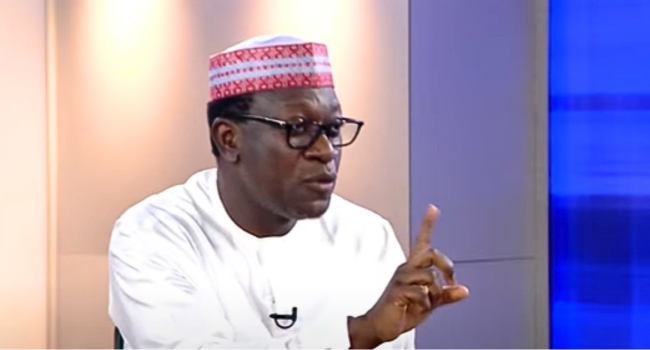
Minister of Works, Engr. David Umahi disclosed this while speaking with journalists during an inspection tour of Section One of the Lagos-Calabar Coastal Highway to assess the environmental impact of flooding on adjoining communities.
Umahi said the planned demolitions are aimed at decongesting flood-prone areas, improving water flow and safeguarding critical infrastructure, stressing that strict compliance with Environmental and Social Impact Assessment (ESIA) requirements must be enforced in physical developments.
He attributed flooding in parts of Lagos to ageing and blocked drainage systems, indiscriminate disposal of refuse into manholes and waterways, and the failure to adequately incorporate ESIA requirements into the development of estates, beachfronts, and residential communities.
The minister dismissed claims that the Lagos-Calabar Coastal Highway caused the recent flooding, insisting that the project’s Environmental Impact Assessment (EIA) underwent international scrutiny and complies with globally accepted engineering and construction standards.
According to him, poor urban planning and inadequate flood-control measures during the approval and development of several estates have worsened flooding, particularly around the Alpha Beach axis and other affected parts of Lagos.
Umahi maintained that inadequate consideration of ESIA requirements in urban development contributed significantly to recurring flooding challenges, urging the Lagos State Government, the Ministry of Environment, and relevant agencies to strengthen drainage infrastructure to protect lives and public assets.
He noted that President Bola Ahmed Tinubu’s directive on tackling flooding nationwide has helped reduce the potential human and economic impact of flooding in Lagos.
The minister further explained that the Lagos-Calabar Coastal Highway was deliberately designed above sea level to enhance flood resilience, adding that its elevation and engineering specifications were based on comprehensive environmental assessments.
He announced that the Federal Government and the Lagos State government would undertake a joint technical assessment to identify additional measures to improve drainage along the highway corridor.
During the inspection, attended by members of the Senate Committee on Works, officials of the Lagos State Ministry of Environment and members of the Environmental Impact Assessment team, Umahi again blamed blocked drainage channels, obstructed waterways and indiscriminate waste disposal for the flooding.
He appealed to residents to stop dumping refuse into drainage channels, stressing that public cooperation remains essential to effective flood management.
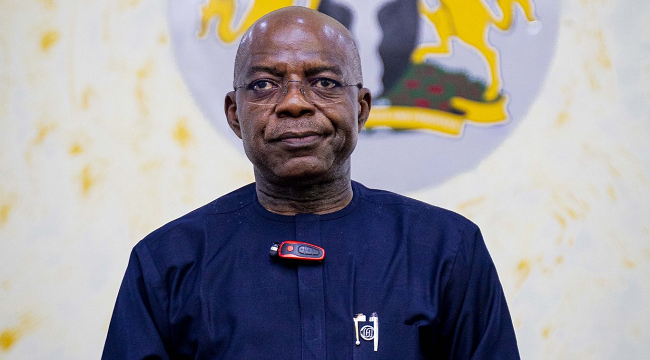
Managing director of Hitech Construction Company, Dany Abboud, said the firm had commenced clearing manholes, culverts and surrounding drainage channels along the project corridor to improve water flow and minimise flooding.
Abboud assured that Hitech would continue implementing mitigation measures to remove blockages and support effective drainage around the highway.
Meanwhile, the engineer’s representative, Iwande Ali, disclosed that more than 34 kilometres of reinforced concrete pavement had been completed on Section Three of the Sokoto-Badagry Superhighway, alongside extensive edge works and site clearance.
Ali said bridge and culvert construction accounted for the unfinished pavement sections but assured the Minister that the project remains on schedule despite engineering challenges.
Also, the minister of state for Works, Barrister Bello Muhammad Goronyo, said construction on the 1,068-kilometre Badagry-Sokoto Highway is progressing across its six sections, with substantial work already completed on parts of the route.
Goronyo said the highway would boost commercial activities, expand agricultural production, create jobs and stimulate economic development across communities. He also dismissed criticisms of the pace of project awards, explaining that approvals and procurement are being carried out in phases, with multiple contractors handling different sections.
He expressed confidence that the concrete highway, being delivered under the administration of President Bola Ahmed Tinubu, would serve the country for decades as a durable national infrastructure.