*I managed to swim out with my baby but she was dead when I made it out – another mother
By Peter Duru, Makurdi
The people of Daudu community in Mbalagh Council Ward of Makurdi Local Government Area had set out last Saturday on a solemn mission, to bid farewell to one of their own.
They travelled across the River Benue to Wadata, a bustling suburb of Makurdi, to attend the burial of a female member of their community. It was a journey they had made countless times before, one dictated by their location and sustained by necessity.
But as dusk settled and they began the trip back home, grief was waiting for them on the water. A violent windstorm that swept through Makurdi that evening turned a routine journey into one of the deadliest river tragedies the community has experienced in recent years.
About 40 passengers, mostly women and children, were aboard the wooden boat when fierce winds and turbulent waves overturned the vessel in the middle of the river.
By the time frantic rescue efforts ended, 11 lives had been lost. Among the victims were children, women and a pregnant woman. Ten bodies have been recovered by local divers, while the search continues for the body of a nine-month-old baby who remains missing days after the tragedy.
For the people of Daudu, located about 25 kilometres from Makurdi behind the Nigerian Army School of Military Engineering (NASME), the pain remains raw and overwhelming.
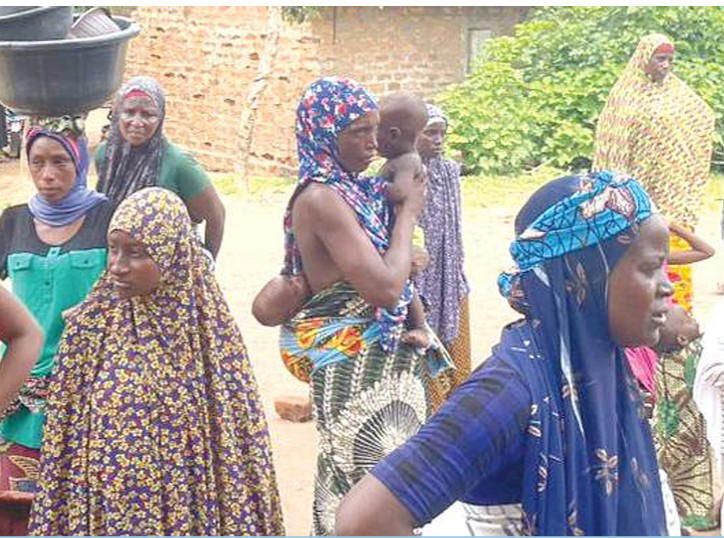
The quiet farming and fishing community has been transformed into a landscape of mourning. Families sit outside their homes in silence. Women break down in tears at the mention of lost loved ones. Children cling to grieving parents who struggle to explain a tragedy they barely understand themselves.
In one household, six family members were lost in a single night. In another, a mother returned home without the child she had carried on her back.
Across the community, survivors wrestle with memories of screams, crashing waves and desperate attempts to stay alive.
For Maimuna Ibrahim, surviving the disaster has brought little relief. She escaped the raging waters, but her one-year-old child did not.
Speaking in tears, she recalled the painful moments that continue to haunt her. “When the incident happened, I held onto my child and struggled to make it out of the river, but she did not survive,” she said.
“I came out of the river clutching her, thinking she was alive. But when I got out, I discovered she was gone.”
Holding back tears, she added, “I carried my baby out of the river, but she was lifeless. That is what life gave me last Saturday, and the pain is too much for me and my family.”
Nearby, Mohammed Umar sat quietly, his face reflecting the trauma of a man who has replayed the events of that evening countless times.
According to him, there was nothing unusual about the trip. The boat, he said, was designed to carry about 60 passengers and had fewer than 50 people onboard that evening. There was no mechanical fault, and the operator was experienced. Then the weather only changed midway into the journey. “The incident happened around 7pm,” Umar recalled.
“We had gone to Wadata for the burial of a community member and were returning home when the rain started. There was a sudden windstorm, and before we knew what was happening, the boat capsized.” He dismissed suggestions of recklessness. “The engine was working properly, and the operator was not careless. It was the strong wind that sank the boat.”
Although he survived, Umar says the emotional scars remain fresh. “I can still hear the cries of women and children when the turbulence started. I tried to save some people. I did my best, but it was an experience I would never wish on anyone. The trauma will stay with me for a long time,” he said quietly.
For another survivor, Amina Ahmed, survival came down to a desperate struggle against the river’s powerful current. “The windstorm came suddenly when we were already close to the middle of the river. I swallowed a lot of water while trying to swim. I was already weak and tired.” According to her, the force of the waves eventually pushed her towards a tree.
“I held onto the tree until help came. It was God who saved me.” But perhaps no story captures the depth of the tragedy more than that of Hannatu Mohammed. Her nine-month-old baby was strapped securely to her back as they boarded the boat that evening. When the boat overturned, she fought desperately to stay afloat. In the chaos, the wrapper holding her child loosened.
The baby slipped into the dark waters.“I had my child tied to my back when the boat capsized,” she said, her voice shaking with emotion.
“As I struggled to swim, the wrapper loosened and I lost my baby.” She searched frantically in the water despite the darkness. “I refused to leave the river because I believed I would find my child.”
But days later, the baby’s body remains missing. “Since the incident, I hardly sleep. Thoughts of my child keep giving me nightmares. I still cannot believe this is happening,” she added.
Not far away sat 30-year-old Rakiya Adamu, clutching her head in disbelief. Her five-year-old daughter, Aisha, was among those who died. Unable to contain her grief, she spoke in barely audible words. “This cannot be true.Why would life be so cruel, even to a five-year-old child?” She whispered.
For Asabe, another resident of Daudu, the tragedy claimed both her sister and her five-month-old baby. And like many families in the community, she is struggling to make sense of the loss.
“We cannot question God But our family is in pain. We are still in shock and finding it difficult to understand why this disaster happened to us,” she said.