Nigeria has taken a major step in its long-delayed broadcast digitisation drive with the formal launch of the Digital Switch Over (DSO), a development the federal government says will not only transform television broadcasting but also strengthen the country’s wider digital economy agenda
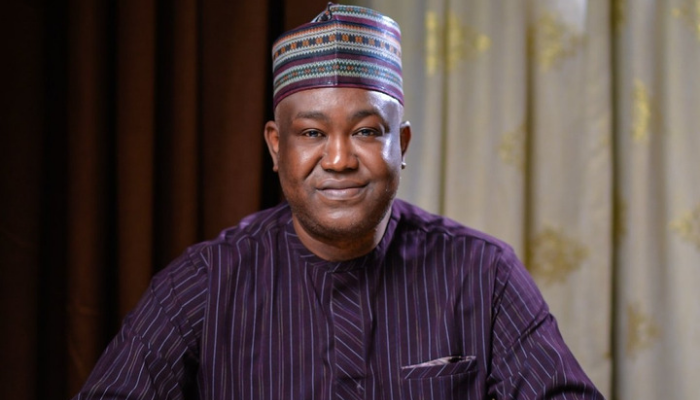
Minister of Communications, Innovation and Digital Economy, Bosun Tijani, described the rollout as the fulfilment of a “longstanding dream” to migrate Nigeria’s broadcasting system from analogue to digital, noting that the transition aligns with President Bola Ahmed Tinubu’s broader economic and infrastructure development vision.
In a statement posted on his X account shortly after the launch, Tijani said the initiative represents “an important milestone in our broader digital transformation agenda” and reflects the administration’s commitment to building foundational infrastructure that would drive long-term growth.
“The launch of Nigeria’s Digital Switch Over (DSO) earlier today marks the actualisation of a longstanding dream to transition our broadcasting from analogue to digital. It represents an important milestone in our broader digital transformation agenda and another demonstration of H.E. President Bola Ahmed Tinubu’s commitment to investing in the foundational infrastructure that unlocks growth and prosperity for decades to come,” he stated.
Nigeria’s journey to digital broadcasting dates back to 2006 when the country, alongside other member states of the International Telecommunication Union (ITU), agreed to migrate from analogue to digital broadcasting under the Geneva 2006 Agreement.
The deadline for Africa was initially fixed for June 2015, but repeated delays, funding constraints and infrastructure gaps slowed implementation.
While pilot switchovers had been launched in cities such as Jos, Abuja, Lagos and Enugu over the years, nationwide implementation remained elusive.
With the latest rollout, the DSO is expected to improve picture and sound quality for television viewers, expand channel offerings and free up valuable spectrum for broadband and telecommunications services.
While experts have long argued that digital broadcasting could unlock new opportunities for content producers and advertisers while boosting the creative economy.
Tijani stressed that the impact of the DSO extends beyond entertainment, pointing to the role of Nigerian Communications Satellite Ltd in driving broader access to education, culture and public information, especially in underserved communities.
“The DSO represents a major advancement for broadcasting whose significance extends far beyond television. By leveraging NigComSat’s satellite infrastructure, Nigerians can benefit from clearer access to information, broader educational and cultural content, improved quality of service, and greater inclusion, ensuring that no one is left behind simply because of where they live,” he said.
The minister also linked the DSO to the government’s wider digital infrastructure strategy, disclosing that the administration is pursuing the deployment of 90,000 kilometres of open-access fibre under Project BRIDGE to improve connectivity across communities, businesses and institutions.
He added that presidential approval had also been secured for the launch of two additional satellites to boost communications capacity.
According to Tijani, these investments will form the backbone of a new digital economy capable of supporting innovation, entrepreneurship and regional content expansion.
“Together, these investments will create a truly transformative digital backbone capable of reaching every Nigerian, regardless of geography. As our digital infrastructure expands, it creates unprecedented opportunities for broadcasters, content creators, entrepreneurs, and innovators to reach audiences across West Africa and beyond. Infrastructure does not merely move signals; it amplifies culture, ideas, and influence as we move closer to a more connected, more inclusive, and more prosperous Nigeria,” he added.