By Kingsley Omonobi
ABUJA — The International Criminal Police Organization, Interpol, has disclosed that Nigeria recorded 1,934 incidents involving Improvised Explosive Devices, IEDs, between 2017 and 2024, with the North-East accounting for the majority of attacks.
Interpol also revealed that neighbouring Cameroon recorded a 421 per cent increase in IED attacks between 2024 and 2025, resulting in 99 casualties in 2025 alone.
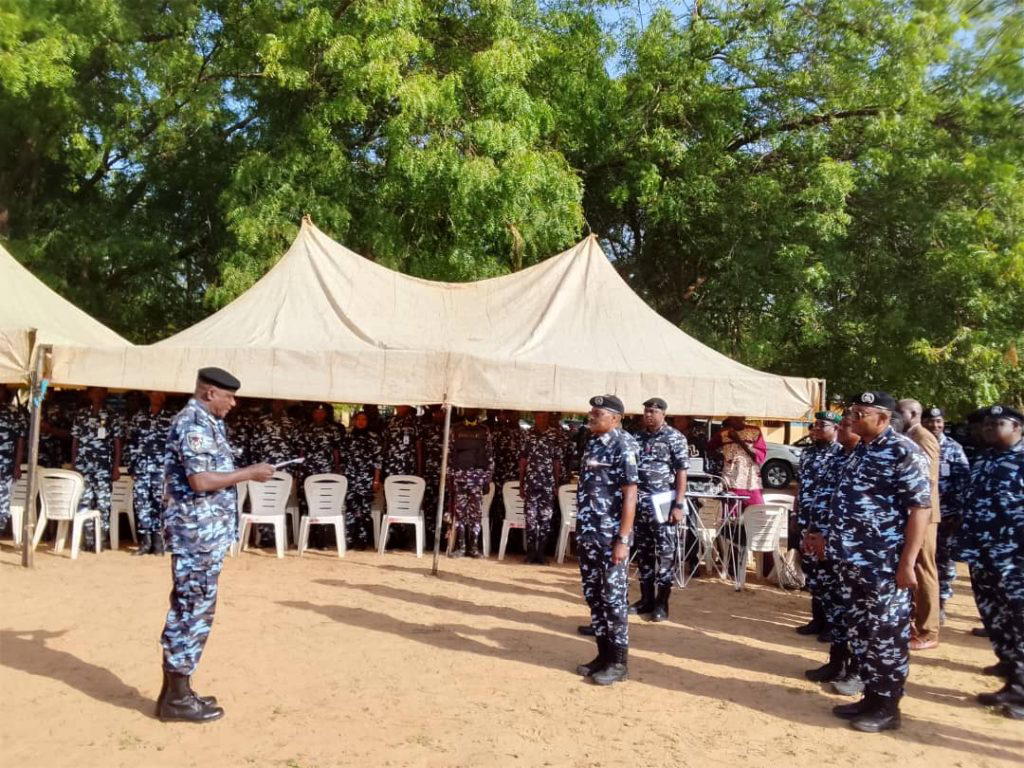
A specialised officer from the Interpol General Secretariat, Mr. Lasha Giorgidze, disclosed this during the Watchmaker Post-Blast Investigation Training for security personnel from Nigeria and Cameroon in Abuja.
According to Giorgidze, the security situation remains alarming, with civilian casualties from IED attacks in Nigeria rising sharply.
“In 2024 alone, civilian harm surged by 177 per cent compared to the previous year. In the first six months of 2025, we have already seen 65 fatalities, exceeding the full-year total of 2024,” he said.
He cited the March 2026 coordinated suicide bombings in Maiduguri, which reportedly left at least 27 persons dead and 146 others injured.
Giorgidze noted that attacks involving IEDs continue to escalate across affected regions, particularly in areas impacted by insurgency and terrorism.
He explained that the joint Nigeria-Cameroon training programme was developed in line with action plans formulated after Interpol’s 2024 assessments, which identified post-blast investigation as a critical operational gap in both countries.
According to him, the shared border and common security challenges facing both countries make regional collaboration essential.
“IED components, precursor materials and financing networks in the Lake Chad Basin do not stop at checkpoints. They traverse national borders,” he said.
He added that several reports indicated that IEDs planted along supply routes accounted for about 60 per cent of casualties recorded in 2024.
The Interpol official warned that terrorist groups were increasingly adopting more sophisticated tactics, including the use of pressure-plate initiators, command-detonated systems, secondary explosive devices and modified commercial drones.
He said the training was designed to strengthen the capacity of participants to convert blast scenes into actionable intelligence capable of disrupting terrorist networks.
According to him, evidence recovered from blast sites can reveal device types, construction methods, sources of materials and links to criminal or terrorist networks.
The three-day training programme focuses on scene safety and cordon management, evidence collection and preservation, device reconstruction, forensic exploitation, intelligence development, chain-of-custody procedures and inter-agency information sharing through Interpol channels.
Giorgidze expressed appreciation to the Government of Canada for supporting counter-IED capacity building efforts across West Africa and the Lake Chad Basin through the Watchmaker and CHEMEX programmes.
Participants at the training were drawn from the National Counter Terrorism Centre, the Office of the National Security Adviser, the Nigerian Army, Nigerian Navy, Nigeria Customs Service, National Emergency Management Agency, Federal Fire Service and various units of the Nigeria Police Force.
Cameroon’s delegation included officers from the National Gendarmerie, Judicial Police and the National Central Bureau in Yaoundé.
Interpol said strengthening post-blast investigation capabilities in both countries would improve intelligence gathering, support prosecutions and enhance regional efforts to combat terrorism and violent extremism.