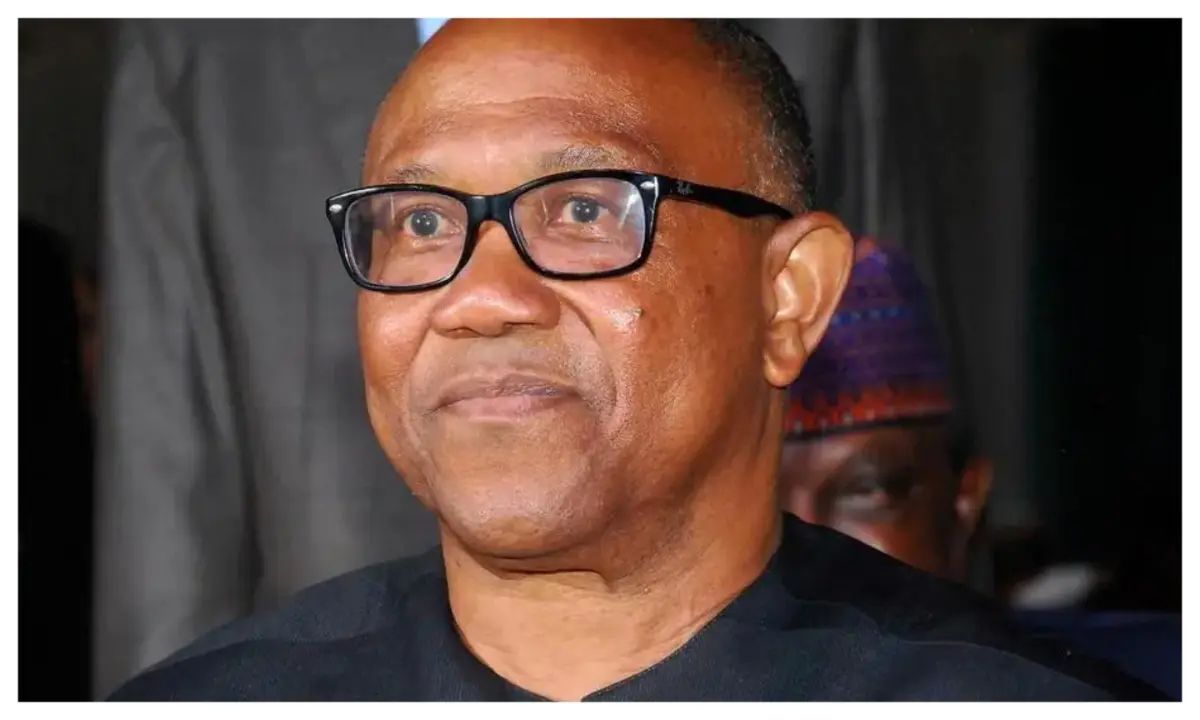
The Presidential candidate of the Labour Party in the 2023 elections, Peter Obi, and winner of the recently concluded 2027 presidential primaries of the National Democratic Congress (NDC), has criticised the borrowing pattern of President Bola Tinubu’s administration.
He described the borrowing as excessive and expressed concern over what he termed a lack of accountability and transparency in the management of public funds.
In a statement posted on Tuesday on his verified social media accounts, Obi alleged that the country’s total debt had increased to approximately N200 trillion, representing an increase of over N100 trillion within three years.
Obi expressed concern that Nigeria’s total public debt had risen sharply under the current administration and argued that the pace of debt accumulation requires greater public explanation, especially amid prevailing economic challenges.
According to him, the current debt level contrasts with the debt profile under former President Muhammadu Buhari, which he said stood at about N49 trillion after eight years in office and projected that figure would have reached about N80 trillion under similar conditions.
Obi argued that the rapid rise in borrowing under the present administration has generated concerns over sustainability and the effective deployment of borrowed funds.
He stated that beyond the volume of borrowing, the major concern remains what he described as insufficient accountability regarding how the resources are being utilised.
Citing figures he said were obtained from the Federation Budget Office, Obi claimed that the Federal Government borrowed N11.89 trillion during the first three quarters of 2025, covering January to September.
According to him, the amount exceeded the government’s planned borrowing target of N10.34 trillion by approximately N1.54 trillion.
The former Anambra State governor argued that in a responsible and accountable system of governance, exceeding an approved borrowing threshold should ordinarily attract detailed public explanation and close scrutiny by relevant institutions.
He, however, lamented that such accountability had not been evident.
Obi also raised concerns about the allocation of the borrowed funds, alleging that only N3.10 trillion of the total amount borrowed during the period under review was directed toward capital expenditure.
According to him, the figure represented only 17.66 per cent of the N17.58 trillion earmarked for capital projects during the same period.
He claimed this left a funding shortfall of approximately N14.48 trillion, representing 82.34 per cent of planned capital expenditure.
Obi questioned how the remaining funds were utilised and said Nigerians deserve explanations regarding government spending priorities.
He argued that public borrowing should produce visible developmental outcomes and insisted that citizens have the right to know how public resources are managed.
“The most disturbing aspect of the financial management situation is that there is no explanation or information regarding how the balance was utilised or deployed,” Obi stated.
He added that Nigerians deserve answers on how national resources are being managed and called for greater openness in fiscal governance.