…… As UNICEF, Osun deploy AI, digital learning against out-of-school crisis
By Chioma Obinna & Rotimi Ojomoyela
EDE, OSUN STATE — Nigeria’s education crisis took a worrying turn on Tuesday as the United Nations Children’s Fund (UNICEF) disclosed that only one in every four schoolchildren in the country can read properly and solve basic mathematics by age 14.
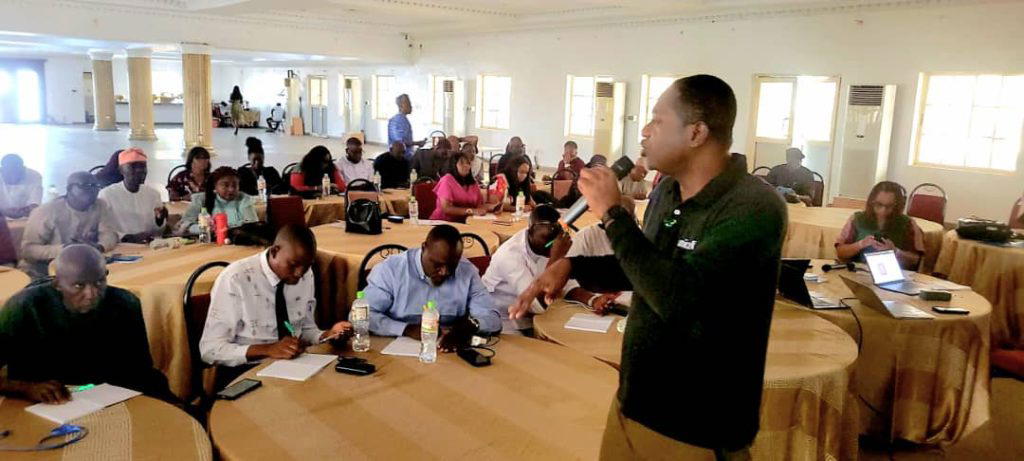
The revelation was made during a two-day media dialogue on Digital Learning, Artificial Intelligence and Skills Development for Out-of-School Children, organised by the Osun State Ministry of Education in collaboration with UNICEF in Ede, Osun State.
Chief of UNICEF Lagos Field Office, Celine Lafoucriere, said the data highlights a deep learning crisis affecting children already in school, warning that millions more remain completely excluded from education.
“I want to start with one number — one in four. Of all the children in Nigeria who actually go to school, only one in four can read properly and do basic math at age 14,” she said.
She added that about 10 million Nigerian children are out of school entirely, warning that they risk being permanently left behind in an increasingly digital and AI-driven world.
“These are not numbers in government reports. These are real children growing up without the skills they need to survive, get jobs, support families or contribute to the economy,” she said.
Lafoucriere warned that the rapid rise of artificial intelligence and digital technology could worsen inequality if urgent action is not taken to improve access to quality education and digital skills.
“The children who know how to use this technology will have a chance. The ones who don’t will be left behind,” she said.
She noted that girls are disproportionately affected due to poverty, cultural barriers and social exclusion, and called on the media to sustain attention on the crisis to drive policy action.
In his remarks, Osun State Commissioner for Education, Dipo Eluwole, said digital technology and artificial intelligence present opportunities to bridge learning gaps and improve education outcomes.
Represented by the Permanent Secretary in the ministry, Muritala Jimoh, he said insecurity, poverty and migration continue to drive the number of out-of-school children.
He said the state government, in partnership with UNICEF and other stakeholders, has introduced interventions such as back-to-school programmes and digital learning initiatives to reduce exclusion.
UNICEF Education Specialist, Harold Kpojime, said Nigeria now has an estimated 20 million out-of-school children, one of the highest figures globally.
He added that one in every three primary school-age children is currently out of school, warning that the challenge goes beyond enrolment to retention and completion.
UNICEF Communication Officer, Blessings Ejiofor, said the dialogue was aimed at strengthening media advocacy on education challenges and promoting awareness of digital learning solutions.
The programme was supported by the Federal Ministry of Education, UBEC, National Commission for Almajiri and Out-of-School Children Education, SUBEBs, LGEAs, the World Bank, Education Cannot Wait, Global Partnership for Education, Microsoft, Airtel, IHS Towers, TECNO, SONY and other development partners.