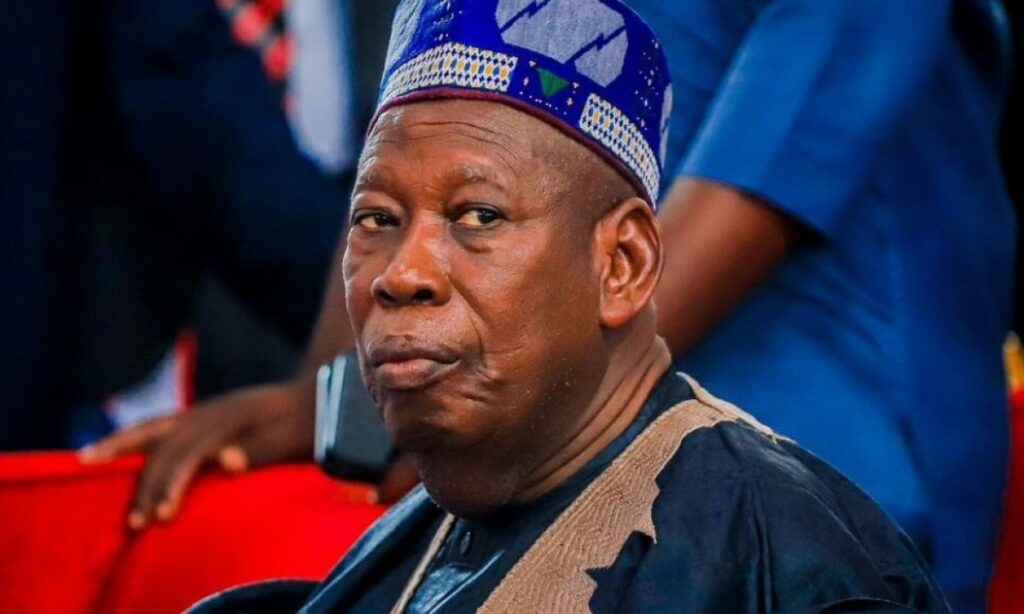
Linus Aleke in Abuja
The Partnership Against Violent Extremism (PAVE) Network has warned political actors against exploiting Nigeria’s worsening security crisis for partisan advantage, insisting that the country stands at a critical crossroads requiring unity, responsible leadership and urgent action to safeguard lives and communities.
The group urged Nigeria to choose governance over propaganda, unity over division, prevention over reaction, justice over impunity and people-centred development over elite competition, warning that the time to act is now.
The warning was contained in a statement jointly signed by the Chair of the PAVE Network National Steering Committee, Mr. Jaye Gaskia, and 18 others, in which the network expressed deep concern over what it described as the escalating wave of organised criminal activities, violent extremism, abductions, killings and attacks on communities across the country.
According to the network, the growing insecurity has created an atmosphere of fear and uncertainty for many Nigerians and is unfolding amid heightened political manoeuvring ahead of the 2027 general election. It stressed that the current situation calls for sober reflection, national consensus and a collective commitment to protecting lives and livelihoods rather than political rivalry and partisan point-scoring.
PAVE condemned the abductions, attacks on schools, killings and assaults on communities being perpetrated by violent extremist groups, armed bandits, kidnappers and other organised criminal networks. It maintained that every Nigerian life matters, describing every abducted child as a national tragedy and every community under siege as a stark reminder of governance failures that must be addressed with urgency, seriousness and compassion.
The network also expressed dismay over what it termed the growing tendency among sections of the political class to politicise the current spike in insecurity. It argued that the crisis is too grave, complex and consequential to be reduced to propaganda, blame games or opportunistic political calculations.
“What this moment calls for is not the weaponisation of tragedy, but the closing of ranks by leaders across party, institutional, religious, ethnic and regional divides,” the statement said.
PAVE further contended that the persistence of insecurity reflects broader governance challenges at the federal, state and local government levels, as well as the failure to effectively manage and resolve historic and emerging grievances across communities. It noted that weak governance, exclusion, injustice and declining trust between citizens and the state have contributed to the expansion of poorly governed spaces where violent extremist groups and organised criminal networks are able to operate and thrive.
While acknowledging the destabilising impact of insecurity across the Sahel and the cross-border nature of criminal and extremist networks, the organisation maintained that military action alone cannot deliver lasting peace. Sustainable security, it said, requires a broader human security approach anchored on governance, justice, development, accountability, community participation and the restoration of citizens’ trust in the state.
The network therefore, called on governments at all levels, political parties, security institutions, traditional and religious leaders, civil society organisations and citizens to work together to confront the crisis.