By Gift ChapiOdekina, Abuja
The House of Representatives has called on the federal government to urgently release adequate funds to the Nigerian Centre for Disease Control and Prevention (NCDC) to strengthen the country’s preparedness against the growing threat of Ebola Virus Disease following a recent outbreak in the Democratic Republic of Congo (DRC).
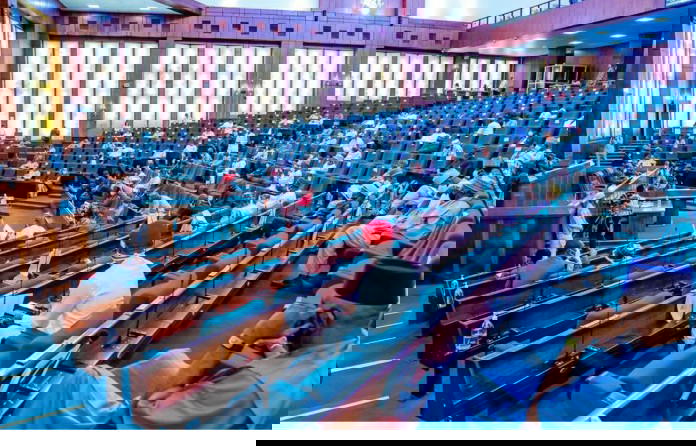
The resolution followed the adoption of a motion sponsored by Hon. Amobi Ogah, who raised concerns over the outbreak of a rare strain of Ebola in the Turi Province of the DRC, as reported by the Africa Centres for Disease Control and Prevention on May 15, 2026.
Presenting the motion on the floor of the House, Ogah noted that the outbreak poses a significant public health risk to Nigeria due to the country’s porous borders and high level of cross-border movement.
He further recalled that on May 25, 2026, the NCDC classified Nigeria as being at high risk of Ebola importation and had activated emergency preparedness measures, including placing the National Emergency Operations Centre on alert.
However, the lawmaker expressed concern that despite the heightened risk, the NCDC has been grappling with severe funding challenges.
According to him, the agency received no operational funding in 2025, while no capital releases have been made against its approved 2026 budget allocation. He also described overhead releases as irregular and grossly inadequate.
Ogah warned that the prolonged funding gap has weakened the NCDC’s capacity to carry out critical health security functions, including outbreak response operations, laboratory services, disease surveillance, logistics coordination, and emergency preparedness activities.
“The preparedness of the Centre cannot be guaranteed under the current circumstances,” he said.
He disclosed that the agency is currently facing several operational challenges, including unpaid vendors for critical goods and services, stalled construction of zonal laboratories, treatment centres and isolation facilities, shortage of laboratory reagents and consumables, inadequate biosecurity infrastructure, limited intensive care and oxygen support systems, and insufficient funding for training and deployment of rapid response teams nationwide.
The lawmaker cautioned that if urgent funding is not provided, Nigeria’s ability to respond effectively to the resurging Ebola threat and other epidemic-prone diseases could be severely compromised.
Contributing to the debate, Hon. Billy Osawaru commended the sponsor of the motion and reminded Nigerians of the country’s successful containment of the 2014 Ebola outbreak after the virus was introduced by an infected traveller from Liberia.
He noted that Nigeria limited the outbreak to 20 cases and eight deaths through coordinated efforts by healthcare workers, emergency response agencies, the Federal Ministry of Health, the NCDC, and international partners.
Osawaru praised the courage and professionalism displayed by frontline health workers during the crisis, particularly the late Dr Stella Adadevoh and other medical personnel whose actions helped prevent a wider outbreak.
The lawmaker, however, warned that Nigeria remains vulnerable due to its extensive land borders, heavy international travel and trade activities, and increasing regional mobility.
He expressed particular concern that the current outbreak is linked to the Bombali virus, a rare strain of Ebola for which there are currently no approved vaccines or specific treatments.
“The risk of importation remains real if proactive preventive measures are not strengthened and sustained,” he said while seconding the motion.
Following its adoption, the House directed the Executive Arm of Government to immediately release funds appropriated for the NCDC to enable the agency to settle outstanding liabilities and carry out its statutory responsibilities effectively.
The lawmakers also mandated the House Committee on Infectious Diseases to monitor the utilisation of the released funds and report back to the House for further legislative action.
In addition, the House called on relevant border and port authorities to intensify surveillance and screening activities at entry points across the country to prevent the importation of the disease, while the Committee on Legislative Compliance was tasked with ensuring full implementation of the resolutions.
The resolution comes amid growing concerns across Africa over the spread of infectious diseases and renewed calls for stronger investment in public health infrastructure and emergency preparedness systems.