By Gift ChapiOdekina, Abuja
The House of Representatives has commenced legislative consideration of three key bills aimed at strengthening the operational capacity of the Department of State Services (DSS), with lawmakers emphasizing the need for sustainable funding, enhanced intelligence training, and indigenous research to address Nigeria’s evolving security challenges.
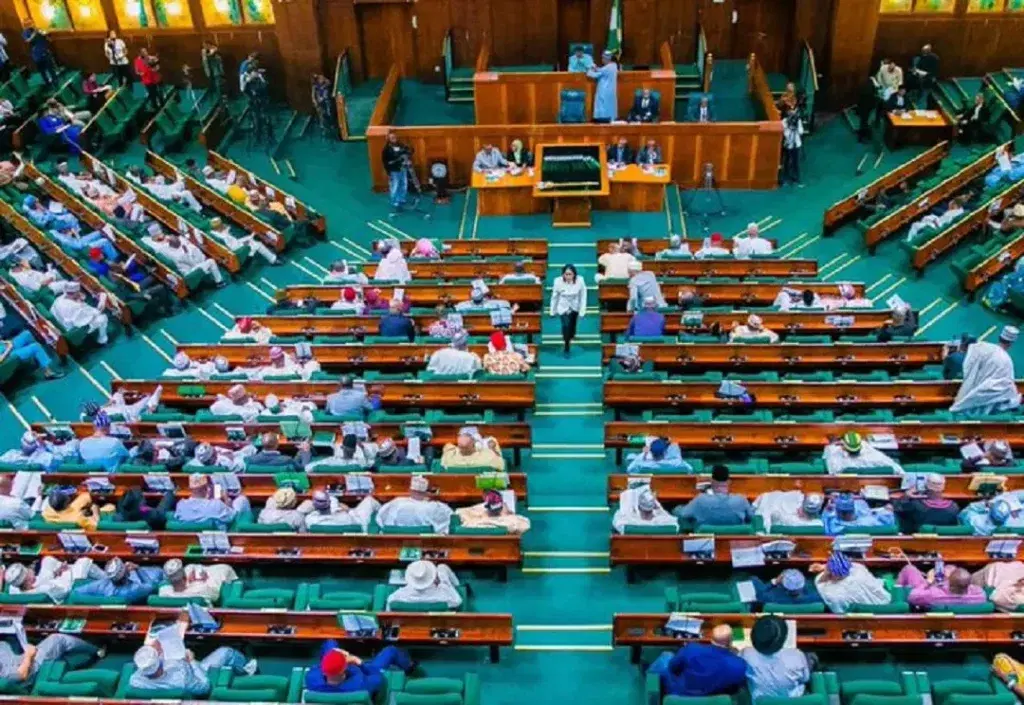
The bills were the focus of a public hearing organized by the House Committee on National Security and Intelligence on Thursday at the National Assembly, Abuja.
Speaking at the hearing, Chairman of the Committee, Hon. Ahmed Satomi, said the proposed legislations seek to bolster funding, professional capacity, and technological innovation within Nigeria’s premier domestic intelligence agency.
According to him, the hearing was convened pursuant to Order 12 of the Standing Orders of the House of Representatives and Section 88(2) of the 1999 Constitution to gather expert opinions and stakeholder input on the bills.
“The bills before us seek to strengthen funding, build professional capacity, and enhance indigenous research capacity within our premier domestic security agency,” Satomi said.
He explained that the committee received memoranda and oral submissions on three proposed laws: a bill to establish the DSS Trust Fund, another to create the Strategic Intelligence Management Institute, and a third to establish the DSS Research and Development Institute.
Satomi noted that the measures are interconnected and designed to improve intelligence operations through sustainable financing, professional training, and local technological development.
“One addresses funding, the second addresses professional training and coordination, and the third addresses indigenous capacity and technology.
Together, they aim to position our intelligence agencies to better protect Nigerians and Nigeria’s national interest,” he stated.
The committee chairman stressed that the public hearing was intended to improve the quality of the draft laws and urged participants to focus their contributions on strengthening national security while safeguarding citizens’ rights.
He assured stakeholders that all credible recommendations would be reflected in the committee’s final report to the House.
Declaring the hearing open, Speaker of the House of Representatives, Hon. Abbas Tajudeen, described national security as the foundation upon which economic growth, social development, and democratic governance depend.
He said the three bills address critical gaps in Nigeria’s security architecture and are designed to enhance intelligence gathering, innovation, professional development, and institutional resilience.
“Security is the foundation upon which every other national endeavour rests. None of this is possible where citizens live under persistent fear and uncertainty,” the Speaker said.
Tajudeen identified terrorism, banditry, kidnapping, cybercrime, transnational crimes, and other emerging threats as challenges requiring more sophisticated intelligence capabilities and sustained investment.
He particularly highlighted the proposed DSS Security Trust Fund as a mechanism for ensuring predictable and sustainable financing for intelligence operations.
“Intelligence operations require consistency, flexibility and the capacity to respond rapidly to evolving threats,” he said, adding that security personnel require modern equipment, logistics, and welfare support to effectively discharge their responsibilities.
The Speaker argued that the proposed trust fund would help move the DSS away from what he described as unpredictable and sometimes inadequate funding arrangements, thereby improving operational readiness.
On the proposed DSS Research and Development Bureau, Tajudeen said Nigeria must increasingly develop homegrown security solutions tailored to its unique realities rather than relying heavily on foreign technologies.
“The changing nature of modern threats requires that we increasingly develop solutions that respond specifically to our own realities, including our geography, demographics, languages and unique security challenges,” he said.
He noted that investing in local expertise, technological innovation, and evidence-based intelligence models would enable security agencies to anticipate threats before they occur.
The Speaker also endorsed the proposed Strategic Intelligence Management Institute, describing it as a vital platform for training and developing intelligence professionals capable of addressing contemporary security challenges.
“A professional institution dedicated to strengthening intelligence management, knowledge development and specialised training will contribute significantly to building a new generation of security professionals,” he said.
Tajudeen urged ministries, government agencies, security institutions, civil society organisations, legal experts, and academics participating in the hearing to provide constructive input to ensure the final legislation establishes effective, accountable, and sustainable frameworks.
He said the initiative aligns with the 10th House’s “People First” legislative agenda, which seeks to create a safer environment where Nigerians can live and pursue their aspirations without fear.
The three bills under consideration are: the Department of State Services Security Trust Fund Bill (HB.2178), the Department of State Services Research and Development Bureau Bill (HB.2716), and the Strategic Intelligence Management Institute Bill (HB.2589).
Stakeholders from government institutions, security agencies, civil society groups, and the public attended the hearing and presented memoranda on the proposed legislation.