…Set up ad hoc committee to investigate budget process
By Gift Chapi Odekina, Abuja
The House of Representatives has resolved to investigate the alleged inclusion of a non-existent government agency, the Presidential Foreign Investment Promotion Council (PFIPC), in the 2026 Appropriation Framework despite claims that it lacks legal backing.
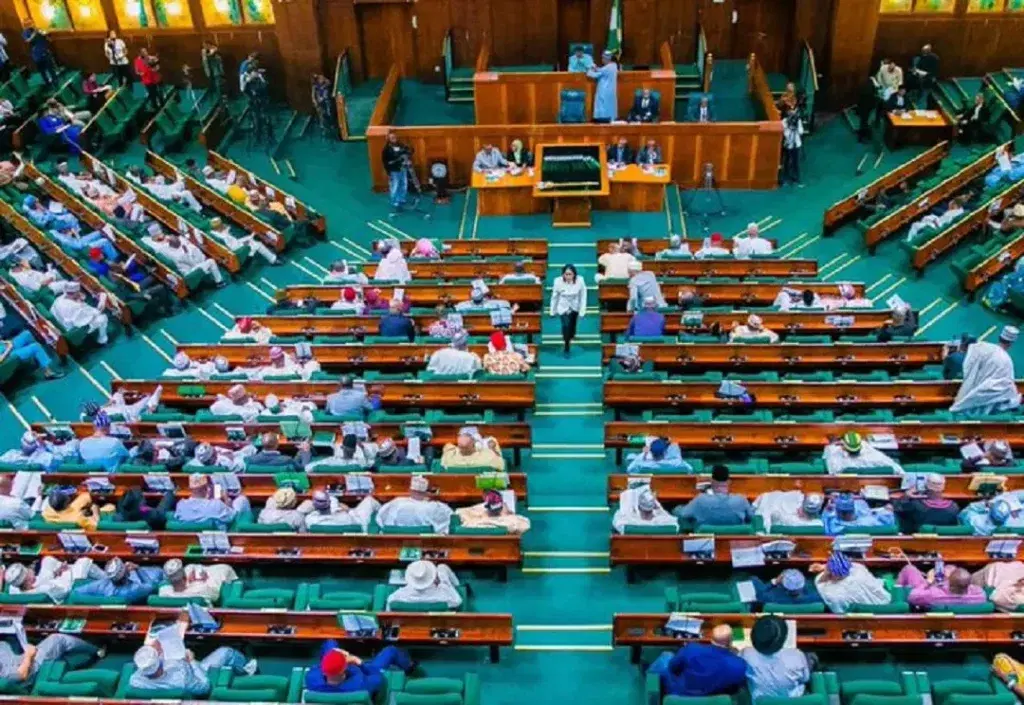
The resolution followed the adoption of a motion of urgent public importance sponsored by Rep. Yusuf Gagdi during plenary on Wednesday.
Leading the debate, Gagdi said records available to the National Assembly indicated that no law establishing the PFIPC exists, although the entity allegedly operated from the Federal Secretariat Complex in Abuja between November 2024 and October 2025 and interacted with several government institutions.
He said the Federal Government had publicly disowned the council, while allegations of forgery and impersonation involving the entity are currently before the Federal High Court in Abuja.
According to the lawmaker, the organisation allegedly relied on documents claiming to be an Act codified as Chapter N2117 of the Laws of the Federation, even though no such legislation exists.
He noted that the closest existing law is the Nigerian Investment Promotion Commission (NIPC) Act, which the purported council appeared to duplicate.
Gagdi expressed concern over reports that more than ₦1.3 billion linked to the entity was captured in the 2026 budget framework, raising questions about how an agency without a valid legal instrument of establishment was included in the federal budget.
He warned that the development exposed possible weaknesses in the nation’s budget preparation and scrutiny process and suggested that other unauthorised entities could have found their way into previous or current appropriation frameworks.
To determine how the alleged inclusion occurred, the House constituted an ad hoc committee with a four-week mandate to trace the budget provision from the Executive’s proposal through legislative consideration and identify the stage at which it was introduced.
The committee is also expected to invite the Minister of Budget and Economic Planning and the Director-General of the Budget Office to explain the verification process for admitting new entities into the budget.
In addition, lawmakers directed the committee to verify all Ministries, Departments and Agencies (MDAs) listed in the 2025 and 2026 appropriation frameworks against their legal instruments of establishment and receive briefings from relevant security and anti-corruption agencies without prejudicing the ongoing court proceedings.
The House further urged the Office of the Accountant-General of the Federation to ensure that no funds are released or warrants honoured in favour of the disputed entity pending the outcome of the investigation.
Lawmakers also resolved that the Budget Office should, henceforth, submit alongside every Appropriation Bill a comprehensive list of all MDAs proposed for funding, indicating the legal instrument establishing each agency to prevent similar occurrences.
Speaking in support of the motion, Chairman of the House Committee on National Security and Intelligence, Rep. Ahmed Satomi, described the development as a serious threat to the integrity of Nigeria’s budgetary process.
He said it was disturbing that an agency allegedly unknown to both the Presidency and the National Assembly could secure budgetary allocations.
“This is a matter of national importance. It must be thoroughly investigated because it affects the credibility of our budget process and public confidence in Parliament,” Satomi said.
Deputy Speaker Benjamin Kalu also supported the motion, revealing that his office had unknowingly engaged officials of the purported council after receiving what appeared to be an official letter bearing the Presidency’s insignia.
Kalu said the letter, dated May 2, 2025, carried the logos of both the Presidential Economic Advisory Council and the Presidential Foreign Investment Promotion Council and listed an office address within the Federal Secretariat Complex, along with a government website.
He explained that his office conducted preliminary verification and confirmed that the organisation occupied the stated office before granting its officials an audience.
According to him, rather than discussing constitutional amendment and investment issues as indicated in their correspondence, the officials appeared more interested in taking photographs during the meeting.
“The experience shows that a letterhead bearing the Presidency or an office in the Federal Secretariat is no longer sufficient proof that an organisation is legally established,” Kalu said.
He stressed the need for the National Assembly to determine how the organisation gained access to government institutions and was allegedly included in the national budget.
Following overwhelming support from lawmakers, Speaker Tajudeen Abbas put the motion to a voice vote, and it was unanimously adopted, paving the way for the investigation.