By Elizabeth Adegbesan
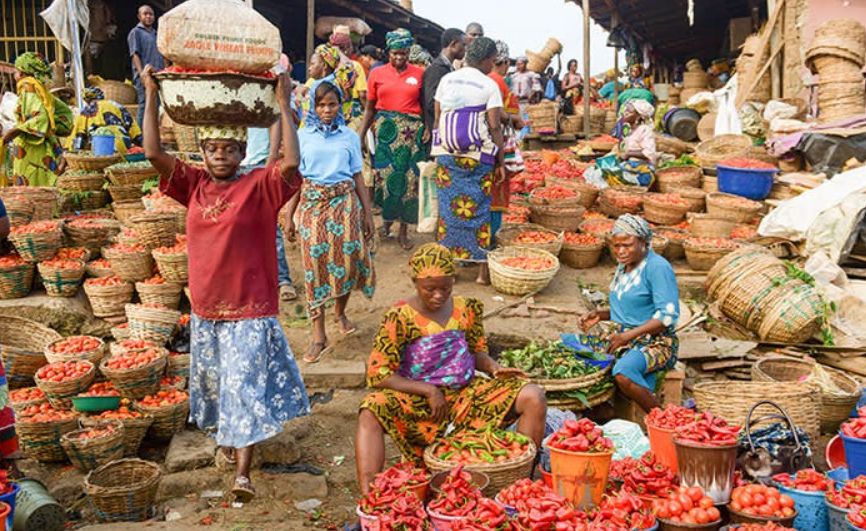
The greed to make more profit in an excruciatingly biting economy that Nigerians are now witnessing is rising by the day. In the local Nigerian markets unscrupulous spice merchants are now exploiting the food inflation to heavily adulterate daily kitchen staples.
Read Also: Food industry on brink as rising costs, forex crisis trigger mass layoffs
Some of the usually tied ground food items like egusi, pepper, pepper soup spices, turmeric powder, ginger powder and the likes are now pure poison. Some greedy food merchants now adulterate them with additives that are dangerous to health.
Economy&Lifestyle has discovered that even fresh tomato-pastes are also being adulterated with industrial powdered colouring.
This is as food ingredients like ground pepper are mixed with rejected plant husks, and finely milled wood charcoal to replicate authenticity and artificially inflate product volumes for maximum profit.
The new trend which wasn’t the case years back are said to be triggered by economic hardship coupled with low purchasing power.
For the traders, these dangerous, non-food additives help them mask low-grade produce and deceive shoppers.
Eye witness reports at grinding points in some markets showed that merchants gather cheap, low-quality, or rejected components, including rotten chilli seeds, fibrous plant straws, dried pear leaves, and starch powder as base materials to ground food staples.
Although the mixture produce a dull, unappetizing brown powder, traders deliberately introduce dangerous additives to colour it up.
An apprentice who confided to us on condition of anonymity revealed that: “For instance, to boost volume, we finely crush wood charcoal or cheap starches and grind directly into the pepper and package them as cameroon pepper.
“The wood charcoal serves as an ideal structural filler because it blends effortlessly into dry spice matrices.
“However, it turns the mixture into an unnatural, dark shade.
“To correct this and create an appealing visual appearance of freshness and potency, we inject industrial powdered colouring and chemicals like Sudan IV red dye. This artificial enhancement ensures the final mixture looks premium like highly valued bright red pepper powder”.
Though public health officials have raised alarms over the severe long-term dangers of these everyday foods, market vendors claim that high operational costs leave them with very few choices.
Mr. Musa Fiditi, a bulk spice and pepper grinder said: “As we all know that the prices of dry chilli pepper and spices have tripled and the cost of personal expenses have eaten deep into the profits and capitals of sellers.
“Consumers are not also left out as they source for cheaper food items that are also voluminous in quantity to cut cost.
“When consumers refuse to pay the real price for pure pepper, some traders blend it with charcoal dust, chaff, and dye powder to meet demand and survive. It makes the sack look full, heavy, and beautifully red.”
However, consumers feel heavily cheated and deeply worried about their health.
Mrs. Chidiebere Njoku, a pharmacist said:”You buy pepper thinking it will spice your food, but it leaves an unnatural red stain on your fingers and tastes like ash.
“We are paying hard-earned money to feed our families slow poison.
“Since I noticed this increase in adulterated food stuffs in the market I invested painstakingly on a very good blender for powdered pepper and spices and this has been helping me monitor what I and my family consume.”
Mrs. Nimot Bello, a bulk spice seller, said: ” Recently, our procurement team went to the market to source where we can buy bulk powdered spices and pepper to cut cost and save time of blending.
” To our surprise, we discovered that charcoal was mixed with chilli pepper seed and packed as cameroon pepper for Nigerians.
“That day, I ordered a very big grinding machine and started processing my spices and grinded pepper myself.”
Dr. Elizabeth Badmus, a Laboratory Scientists, noted that what traders see as a smart economic shortcut is a major public health emergency.
“Industrial dyes and charcoal produced from unknown wood sources are contaminated with polycyclic aromatic hydrocarbons and heavy metals. “They do not digest.
“They accumulate inside the liver and kidneys, causing quiet, long-term destruction”, she said.
She advised shoppers to test their spices by dropping a small spoonful of powdered pepper into a glass of clean water.
“Pure pepper powder floats briefly or leaves clean, natural particles.”
“Conversely, adulterated versions containing heavy mineral dyes or artificial powder colorings sink immediately, leaving distinct, bright artificial chemical streaks down the sides of the glass.”
