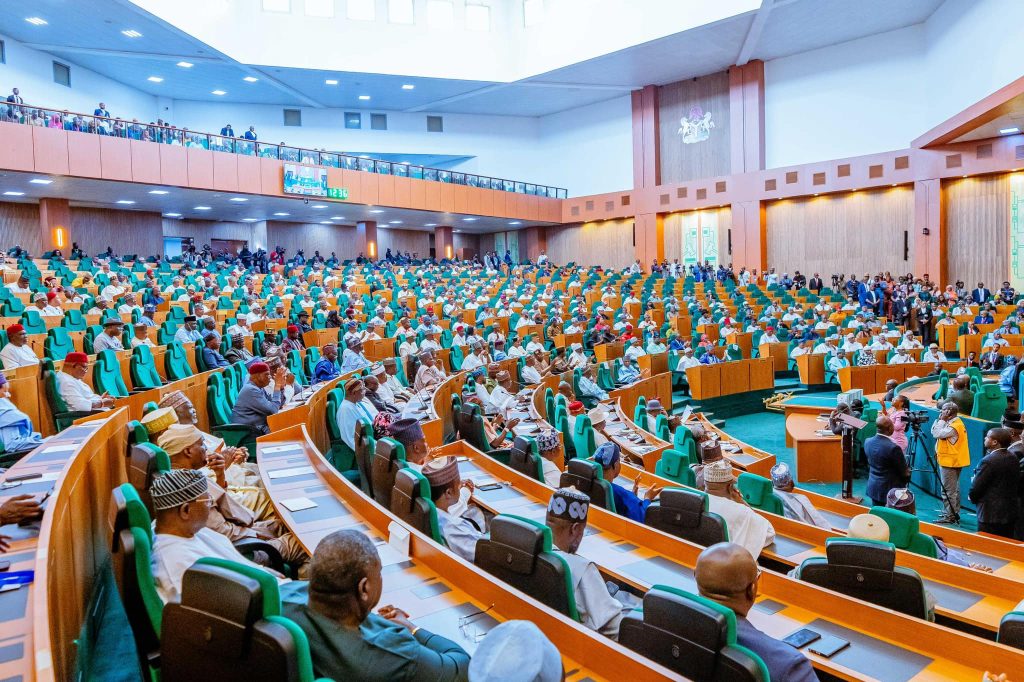
The House of Representatives has warned the service chiefs to step down honourably if the country’s deteriorating security situation persists and public confidence in the government’s efforts is not restored within a clearly defined period.
It also urged President Bola Tinubu to come up with a comprehensive and aggressive security strategy to flush out bandits, terrorists and kidnappers from their hideouts in Nigeria.
The call followed the adoption of a motion of urgent public importance moved by Rep. Ibe Osonwa, who represents the Arochukwu/Ohafia Federal Constituency of Abia, during plenary on Tuesday.
The motion is titled, “A Call for Immediate Executive Action on the Surge in Banditry, the Daily Abduction of Schoolchildren and the Perilous Security Situation in Nigerian Schools and Places of Worship.”
Osonwa, however, reiterated calls on the president by several other sources to restore safety across the country amid worsening insecurity.
He expressed concern over the escalating wave of kidnappings, banditry, terrorism and attacks on vulnerable communities nationwide.
Osonwa reminded the federal government of its constitutional responsibility to protect citizens, citing Section 14(2)(b) of the 1999 Constitution (as amended).
The lawmaker explained that the section as cited provides that “the security and welfare of the people shall be the primary purpose of government.”
He lamented the growing trend of attacks on schools, noting that “the abduction of schoolchildren across several parts of the country has disrupted education and deepened Nigeria’s out-of-school children crisis.
According to him, thousands of children have been forced out of classrooms due to fear of attacks, while many families continue to grapple with the trauma of kidnappings.
Osonwa decried the systematic targeting of schools and places of worship by criminal elements, warning that institutions traditionally regarded as safe havens have increasingly become soft targets for bandits and kidnappers.
He said worshippers across the country now face the risk of attacks, abductions and killings while observing religious activities, which undermines citizens’ constitutional rights to freedom of thought, conscience and religion.
The lawmaker also painted a grim picture of the economic consequences of insecurity, stating that “many businesses have shut down, farming communities have been deserted and families plunged into poverty.”
Osonwa argued that the current security response appeared largely reactive and insufficient to stem the operations of criminal groups.
He warned that the apparent inability to decisively confront bandits and terrorists had created the impression that the government was losing control of parts of the country to criminal elements.
Following deliberations, the House condemned in “the strongest possible terms” the continued banditry, mass abductions and attacks on schools and churches across Nigeria.
The lawmakers resolved to transmit “an urgent and solemn appeal” to President Tinubu, as Commander-in-Chief of the Armed Forces, “reminding him of his oath to protect the lives and property of Nigerians”.
The House specifically demanded the immediate deployment of “an aggressive, unrelenting and comprehensive security strategy” to dismantle bandits’ strongholds, secure vulnerable schools and places of worship.
They also pledged to ensure the unconditional release of citizens held captive by criminal groups.
The House also mandated its Committees on Defence, National Security and Intelligence and the Army to intensify oversight of the implementation of the resolutions and report back within two weeks for further legislative action.
NAN reports that Nigeria has continued to battle multiple security challenges, including banditry, terrorism, kidnapping for ransom and communal violence, particularly in parts of the North-West, North-Central and North-East zones.
In recent years, mass abductions of students from schools in Kaduna, Niger, Zamfara and other states have drawn widespread national and international concerns.
This has prompted repeated calls for stronger security measures to protect educational institutions and vulnerable communities. (NAN)