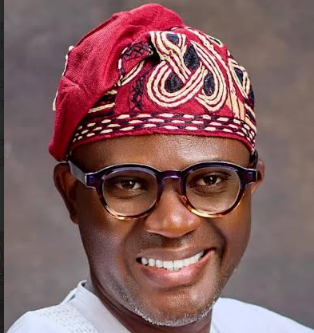
Human rights activist and African Action Congress (AAC) presidential candidate, Omoyele Sowore, has unveiled what he described as his administration’s education blueprint ahead of the 2027 general election, promising free education at all levels, the abolition of public examination fees and sweeping reforms across Nigeria’s education sector.
Sowore, who shared the policy document on his verified X handle on Monday, said no child would be required to pay for the West African Senior School Certificate Examination (WAEC), the National Examination Council (NECO) examination or any other public examination under his administration.
Presenting the proposed policy, Sowore said, “Let’s use this opportunity to show you, at a glance, what our education policy will look like after 2027.
“No government under a #Sowore2027 administration will ever ask your child to pay WAEC, NECO, or any other public examination fee. Education will be free because knowledge is a right, not a privilege.
“Our revolutionary education policy guarantees free, high-quality education from early childhood through university, backed by modern classrooms, virtual learning, well-paid teachers, student grants, and equal opportunities for every Nigerian child.
“This is not a promise of politics. It is a revolutionary commitment to build a nation where no child’s future is determined by poverty. Read it. Share it. Debate it. Join the movement to make it a reality.”
The policy document outlined a 20-point education manifesto covering access to education, infrastructure, funding, curriculum, technology, research and student welfare.
On the overall vision, the document stated, “Sowore 2027 Education Manifesto – Building a modern, free, inclusive, and future-ready education system.”
It further promised, “Free education at every level – Free from early childhood through university. No Nigerian will be denied education because of poverty.”
To support students financially, the manifesto stated, “Semester education grants – Students in public tertiary institutions will receive semester grants to support their academic and living expenses.”
Sowore also proposed a restructuring of the education system, stating, “A new educational structure – 5 years primary, 5 years secondary, 4 years university degree. Every LGA will establish a community college offering 2-year associate degree programmes.”
The document also promised expanded early childhood education, saying, “Early childhood education – Universal early childhood education through well-equipped nursery and pre-primary schools.”
On technology and digital learning, the manifesto stated, “Physical & virtual learning – Every school will have high-speed internet, digital classrooms, virtual labs, online libraries and cloud learning resources. AI & digital education – AI-assisted learning, coding from primary school, digital literacy for all, robotics & automation, AI tools, data science and cybersecurity. Community colleges – Associate degrees, technical certifications, entrepreneurship programmes, adult education, continuing education and digital skills training.”
On technical education, Sowore stated, “Technical & vocational education – Renewable energy, manufacturing, construction, AI & technology, software engineering, agriculture, aviation, maritime, health technologies and creative industries.”
For polytechnic education, he stated, “Polytechnic reform – All polytechnics & monotechnics will become universities.”
The proposed reforms also prioritise teachers. It read, “Teachers first – Better salaries, housing, research opportunities & recognition.” It also promises “2-year teachers’ institutes, modern pedagogy, AI & digital learning, educational technology, classroom leadership and curriculum development.”
The manifesto further pledged, “University autonomy – Free from political interference. Transparent & democratic governance. Academic, financial & administrative autonomy with accountability.”
On academic freedom, the document stated, “Academic freedom – Freedom of research, expression, association & peaceful participation. Campuses as centres of free thought and intellectual debate.”
The policy also supported student representation. It stated, “Student unionism – Independent student unions will be protected. No suppression for legitimate activism.”
To strengthen research, he promised, “Research & innovation – Merit-based grants, impact-driven research” in areas including “medicine, AI, renewable energy, biotechnology, climate science, manufacturing, transportation, defence technology and public health.”
The activist also proposed establishing a “National education & innovation cloud” featuring “digital libraries, academic journals, AI learning assistants, virtual laboratories, educational software, research databases, open educational resources,” with “access for every student & teacher, everywhere.”
On infrastructure, the manifesto stated, “School infrastructure – AI-powered smart hostels on campuses,” alongside “modern classrooms, laboratories, libraries, safe hostels, clean water, renewable electricity, internet connectivity, sports facilities, arts centres and disability access.”
Student welfare also features prominently. He added, “School feeding & student welfare – Healthy daily meals for pupils, health services, counselling, menstrual hygiene & mental health support. Inclusive & special education – Accessible infrastructure, assistive technologies, Braille & sign language, special educators and individual support. No child will be left behind.”
The final pillar of the policy focused on extracurricular development. It stated, “Sports, arts & culture – Sports, music, theatre, literature, visual arts, film & culture will be fully funded. Talent + education = total development.”