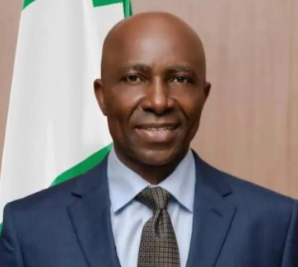
By Emma Ujah, Abuja Bureau Chief
ABUJA — The Tax Ombud, Dr. John Nwabueze, has pledged to eliminate arbitrariness in Nigeria’s tax system and tackle the challenge of multiple taxation affecting individuals and businesses across the country.
He made the commitment on Tuesday during a media parley with finance correspondents in Abuja.
According to him, the Office of the Tax Ombud was created to promote fairness, strengthen trust between taxpayers and revenue authorities, and provide an independent mechanism for resolving tax-related disputes.
“Our mandate is clear: to serve as a trusted bridge between taxpayers and revenue authorities through mediation, conciliation, stakeholder engagement, and alternative dispute resolution mechanisms that reduce prolonged litigation and enhance institutional efficiency,” he said.
He explained that the office is designed to protect taxpayers’ rights while improving transparency and confidence in the tax system.
Dr. Nwabueze noted that modern tax systems globally are not only focused on revenue generation but also on fairness, accessibility and effective dispute resolution.
He said the office has introduced digital platforms to improve service delivery, including a website, call centre and case management portal that allow taxpayers to submit complaints and track their cases in real time.
On the issue of multiple taxation, he said ongoing reforms by the Joint Revenue Board are aimed at harmonising tax administration and reducing excessive levies imposed at different levels of government.
“What the Joint Revenue Board is doing right now is to bring everybody together and ensure these issues are addressed,” he said, adding that steps are being taken to provide relief to Nigerians, particularly in cases involving excessive local government taxation.
He also announced plans for a nationwide awareness campaign to educate citizens, especially in rural areas, on tax obligations and available complaint channels.
Dr. Nwabueze said the office has introduced a callback system that allows Nigerians without sufficient airtime to still reach the office through missed calls or SMS notifications.
“If you don’t have money on your phone to call, and you have enough to send an SMS, we also get that message and call that number. So anybody in a rural area can reach us,” he explained.
He urged the media to support ongoing tax reforms by sensitising the public on the role of the Tax Ombud and the importance of voluntary tax compliance.
“The Office of the Tax Ombud is here to encourage citizens to understand the tax system, pay their taxes, and contribute to the development of their country,” he added.