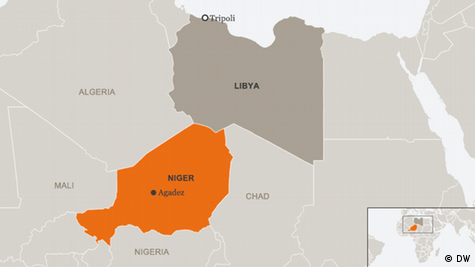
A 23-year-old female Libya returnee, Endurance Daniel, on Wednesday recounted how she and other migrants drank their urine to survive due to lack of water in the desert.
Daniel, in an interview with the News Agency of Nigeria (NAN) upon return to Nigeria, said she travelled with 52 other migrants in a single vehicle, out of whom she said seven people died under harsh conditions during the journey.
She recounted how she was deceived into travelling to Libya at age 17, after promises of employment and opportunities in the North African country.
“We spent more than a month in the desert. There was no water, so we were drinking our urine to survive.
“At a time, urine was no longer coming out. Some of us had blood coming out instead of urine.
“Those who died were left where we stayed in the desert. We watched their bodies decay for days because we had nowhere else to go and there was nothing we could do,” she narrated.
Daniel, one of the 182 migrants recently assisted to return to Nigeria by the International Organisation for Migration (IOM), said it was her mother’s friend who convinced her family that life in Libya offered better prospects.
“My mother’s friend told my mother that her children were there and doing well. She said I could work for less than a year and make good money,” she stated.
Daniel said that the woman promised that after repaying the sponsor through domestic work, she would be free to pursue any occupation or business.
“She told me that I could even open a shop after settling my sponsor. Things were difficult at home. My family was suffering, with no food to eat. So I decided to go (to Libya),” she said.
Daniel stated that she arrived in Libya in 2019 but quickly discovered that the reality differed sharply from the promises made before her departure.
“On getting to Libya, my sponsor told me there were only two jobs available for women migrants – domestic work and prostitution. There was nothing else,” she recounted.
The returnee explained that she attempted to return home immediately, adding, however, that her attempts were frustrated, as the trafficker insisted she must first repay the transportation expenses incurred during the journey.
“When I asked for a phone to contact my family, he (the trafficker) refused. He feared my family would send money for me to return (to Nigeria),” she said.
According to her, traffickers used threats, intimidation and exploitation to control migrants, forcing many into situations against their wishes.
“He (the trafficker) said that if we refused his instructions, he would sell us to places where people were forced into prostitution. We were frightened and decided to follow his instructions,” she said.
Daniel further alleged that promises of communication with family were used as leverage to pressure vulnerable migrants into exploitative relationships.
“I accepted because I desperately wanted to speak with my family. It had been months since I last heard from them,” she said.
Daniel also narrated the harsh desert crossing experience, stating that they were faced with severe dehydration, hunger and the deaths of the several migrants with whom they were travelling together.
She said that the surviving migrants were eventually moved to camps where they received inadequate food before being transferred to their sponsors.
“They gave us plain spaghetti without salt or anything else. We ate it because we had no choice,” she said.
The returnee said migrants were often concealed in vehicles and transported secretly to avoid detection by security authorities and immigration officials.
“If they found you during inspections, you could end up in prison. If they did not, you were considered lucky,” she added.
Daniel, however, expressed gratitude for the opportunity to return home, urging young Nigerians to verify migration opportunities carefully before embarking on dangerous journeys.
“People should not believe everything they are told. What I experienced was completely different from the promises made before I left,” she concluded. (NAN)