By Suleman Ahmad Tudu
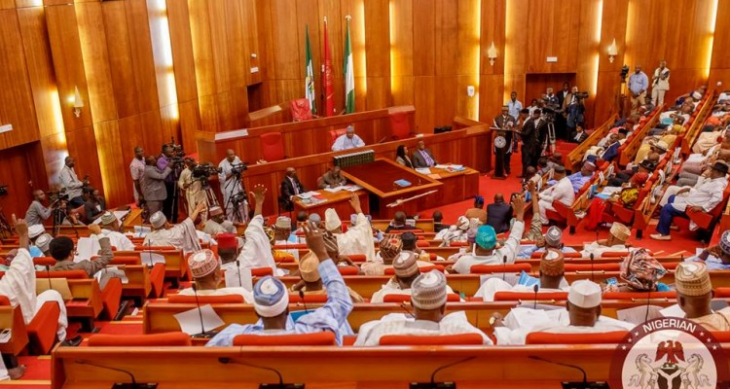
The Nigerian Senate has recently passed a Bill establishing both the Federal and State Police. The realities that necessitated this landmark constitutional amendment are too glaring to ignore.
Over the years, Nigeria has faced multidimensional security challenges: separatist violence in the Southeast, insurgency in the Northeast, communal clashes in the North Central, cultism and armed robbery in the Southwest, militancy and vandalism in the South-South, and the devastating banditry and kidnapping in the Northwest.
The threats are varied, entrenched, and nationwide. The hard reality is that nowhere is safe in Nigeria today, and no one is spared. Even areas once considered relatively secure are no longer insulated. The menace spreads rapidly and respects no boundaries.
These growing challenges seem to have outpaced federal response capacity, leaving many communities helplessly exposed and grossly under-policed across the country.
The post-debate surrounding the passage of the State Police Bill has been intense. Some see it as a game changer, while others remain skeptical. Most critics argue that state governments lack the financial and institutional capacity to run State Police. A second fear is that the police could become instruments of political oppression in the hands of governors.
These concerns are, to some extent, genuine and fair. However, I will say without mincing words that Zamfara is the clearest case for why State Police should not be further delayed on that account. The current leadership in the state has demonstrated sufficient political will and can serve as a model for what subnationals are capable of doing.
Under Governor Dauda Lawal, Zamfara State has undertaken critical security reforms that strengthen institutional capacity and integrity in security management. The state has also been bankrolling all security formations with operational vehicles, logistics, and other essential assets.
Out of foresight, Governor Lawal established the State Security Trust Fund to mobilize resources for anti-banditry operations. To date, the State, through the Fund, has procured over 200 vehicles, including about 30 armoured personnel carriers, and over 100 motorcycles. All of these assets have been deployed to security agencies across the state.
Beyond equipment, the state government has been providing fuel and other operational logistics to all security agencies. It has also reconstructed several police stations and police quarters and procured advanced surveillance drones to strengthen intelligence gathering.
To complement conventional forces, the state established a local security outfit, the Zamfara State Community Protection Guards, known as “Askarawa.” The outfit has recruited over 2,000 locals. In addition, hunters from Maiduguri with extensive counter-terrorism experience have been engaged to form a hybrid security force. The state is hundred percent funding their capital and recurrent expenses.
It is therefore not out of place to say that Zamfara is already bearing the cost of security, even without constitutional control over the Police or other federal security agencies. Creating State Police will therefore not be an additional burden on the state, but merely a formalization of an existing responsibility.
It is my firm belief that our security challenges are local and therefore require local solutions. As Governor Lawal often says: “Nobody will come and fix them for us. We will do it ourselves.”
Now imagine the Askarawa constitutionally backed as State Police, with more sophisticated training, a better arsenal, and a closer chain of command. They already possess superior knowledge of the terrain compared to federal officers who might be posted to the state. More importantly, the motivation of fighting for your own communities is incomparable.
On the fear of using the police for political witch-hunts, Governor Lawal has, arguably, no dictatorial record of clamping down on the opposition. Over the past three years that he governed Zamfara, he has never used any government institution against his opponents nor jailed any critic.
I am also quite confident that adequate mechanisms will be put in place to ensure accountability of the state police so that the institution will be stronger than the selfish interests of any individual in the future.
Tudu is the Senior Special Assistant on Media, Office of the Secretary to the Zamfara State Government. He writes via [email protected]